





Key Takeaways
- Most activities require a license: In Illinois, leasing, renting, collecting rent (including online rent collection), and negotiating lease terms are considered "brokerage activities" regulated by the Real Estate License Act of 2000.
- Three main paths: You can choose between a Residential Leasing Agent license (entry-level), a Real Estate Broker license (standard), or a Managing Broker license (supervisory).
- Salary expectations: As of May 2023 BLS data, the mean annual wage for property and real estate managers in Illinois is approximately $81,310, with Chicago averages slightly higher at $84,250.
- Modern requirements: Exams are handled by PSI, and the state is transitioning to the new CORE licensing system (target full implementation: August 2026).
- Tools matter: While licensing is mandatory for legal compliance, using software like DoorLoop is the standard for operational efficiency.
What Is a Property Manager?
In Illinois, a property manager handles different tasks, such as negotiating lease terms, vetting prospective tenants with screening and background checks, handling maintenance requests, and much MUCH more. However, it is critical to understand the legal distinction immediately: If you are leasing, renting, supervising the collection of rent, or negotiating contracts for others, you are performing "brokerage activities" under Illinois law.
Most professional property managers in Illinois must hold a real estate license. The Real Estate License Act of 2000 defines these activities clearly, meaning anyone providing assistance intended to sell or lease a property generally requires a license issued by the Illinois Department of Financial and Professional Regulation (IDFPR).
If you plan to become a property manager in Illinois, you should learn about the specific licensing paths (Leasing Agent vs. Broker), eligibility criteria, and the modern qualifications you need to succeed in 2026 and beyond. Fortunately, you can find all those details here.
In some cases, property managers may also oversee a rental unit when owners are unable or don't want to manage their properties themselves. Therefore, they are also known as:
- Real estate managers
- Property administrators
- Asset managers
- Investment managers
- Community Association Managers (CAMs) – Note: CAMs have a separate license for HOAs.
Do You Need a License to Be a Property Manager in Illinois?
The short answer is: Yes, for most duties.
Unlike some states where property management is a "gray area," Illinois is specific. If you perform any of the following for another person for compensation, you need a license:
- Leasing or renting residential property.
- Offering or negotiating to lease or rent.
- Supervising the collection of rent.
License Exceptions in Illinois
There are limited exceptions where a license might not be required, though you should always verify with legal counsel or the IDFPR:
- Resident Managers: Managers who live on-site at the property they manage (often common in large apartment complexes) may sometimes be exempt depending on their specific duties, particularly in multifamily properties.
- Administrative Tasks: Support staff who strictly perform administrative duties—such as bookkeeping, scheduling maintenance, or answering phones—without engaging in leasing negotiations or showing units may not need a license.
Real Estate License Paths for Property Managers in Illinois

Step 1: Meet Illinois Eligibility Requirements
Before enrolling in education, ensure you meet the basic eligibility criteria. Note that the IDFPR is currently rolling out the CORE licensing system, with full implementation targeted for August 2026, so application portals may look different depending on when you apply.
General requirements usually include:
- Be at least 18 years old (for Leasing Agents) or 21 years old (for Brokers). Note: Brokers can sometimes be 18 if they meet specific education criteria.
- Have a high school diploma or GED.
- Have a valid Social Security Number or ITIN.
- Be of good moral character (background check required).
Step 2: Complete Pre-License Education

You cannot simply take the exam; you must complete state-approved coursework first. The hours depend on which license you are pursuing:
- For Residential Leasing Agents: Typically requires a 15-hour state-approved pre-license course.
- For Real Estate Brokers: Typically requires 75 hours of pre-license topics plus a 15-hour broker applied real estate principles course (90 hours total).
Always verify the current hour requirements on the IDFPR Division of Real Estate website or the current PSI candidate handbook, as these regulations can change.
Step 3: Pass the Illinois Licensing Exam and Apply Through IDFPR
Once your education is complete:
- Register for the Exam: Exams are administered by PSI. You will pay your examination fee directly to PSI (fees typically range from $37 to $58 per attempt depending on the license type).
- Pass the Exam: You must achieve a passing score. The Residential Leasing Agent exam is shorter and focused on fair housing and leasing laws; the Broker exam covers broader real estate law.
- Find a Sponsor: In Illinois, a Leasing Agent or Broker generally cannot work independently; you must be sponsored by a Sponsoring Broker.
- Apply for the License: Submit your application and fees to the IDFPR via their online portal.
Property Manager Salary in Illinois

Understanding your earning potential is key. While salaries vary by experience and portfolio size, data from the Bureau of Labor Statistics (BLS) gives us a clear picture for 2025/2026 planning.
Other factors that may influence how much a property manager can earn in Illinois include certifications, education, and commission structures (e.g., earning a percentage of rent collected).
Duties That Usually Require a License in Illinois
Property managers must fulfill several responsibilities. According to Illinois law, the following activities typically trigger the need for a license:
- Leasing & Renting: Showing rental units and negotiating lease terms with prospective tenants.
- Rent Collection: Supervising the collection of rent payments.
- Marketing: Listing properties for rent or lease.
- Tenant Screening: Examining prospective lessees' credit scores and background checks.
Admin Duties (License generally not required):
- Coordinating general maintenance and repairs.
- Bookkeeping and accounting (though rent collection supervision is licensed).
- General administrative paperwork.
Skills That Make Property Managers Valuable
If you want to work as a property manager, these are some of the skills you must have:
- Communication: This job involves frequent contact with tenants, owners (often via a property owner portal), and vendors, often supported by a tenant management software. Since you must make calls, send text messages, and write emails, strong communication skills are non-negotiable.
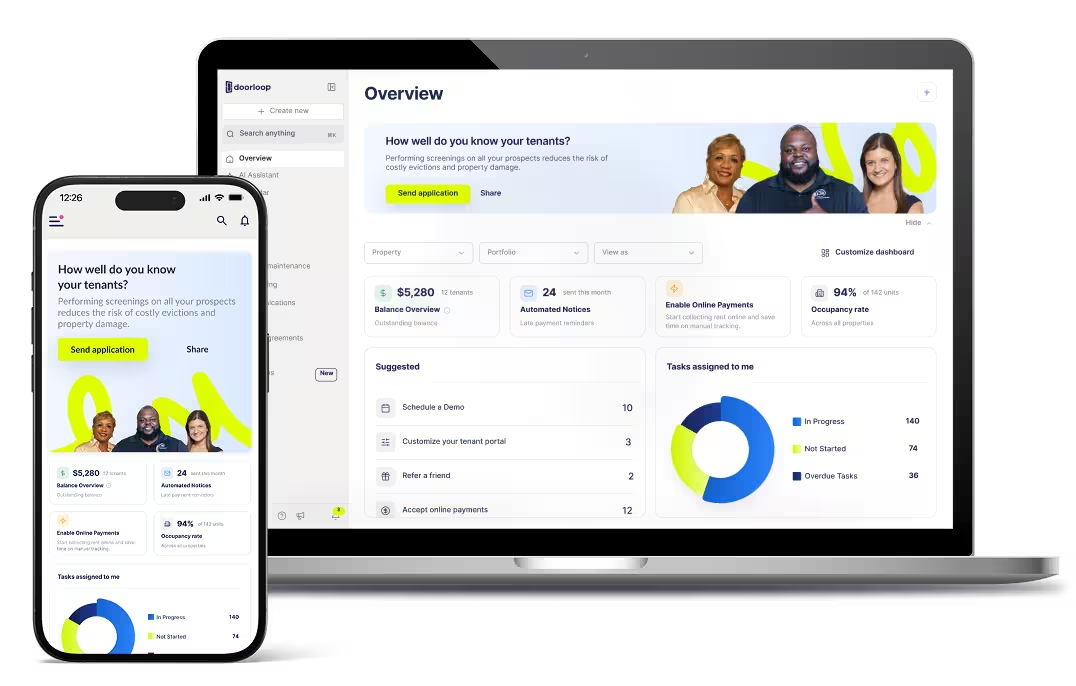
- Tech Savvy: Modern property managers use software like DoorLoop to automate rent collection, maintenance requests, and owner reports. Being comfortable with technology—such as using a property management app—is no longer optional—it's a requirement for speed and growth.
- Organization: Property managers follow up on multiple operations, including property maintenance, lease procedures, and contract signing.
- Basic Accounting: You must track payments, calculate late fees, and create expense reports using a property management accounting software like DoorLoop or QuickBooks. While software solutions perform the calculations, understanding the basics helps you explain finances to owners.
- Attention to Detail: Handling legal paperwork requires precision, especially with tenant applications, background checks, contracts, and more. You must pay close attention to details when completing lease agreements and understanding local regulations.
Qualifications That Help You Get Hired Faster
In Illinois, real estate managers can stand out with the right background.
Education Requirements for Real Estate Managers
The minimum requirement to obtain a real estate license is a high school diploma. However, some property management firms may prefer candidates with college experience in:
- Business administration
- Finance
- Real estate principles
- Risk management
Certifications That Boost Credibility
While the state license is a legal requirement, certifications are professional badges of honor that can lead to higher pay. Consider these national designations:
National Apartment Leasing Professional (NALP)
Ideal for entry-level employment. Leasing professionals take NALP accreditation to develop basic skills. Requirements typically include six months of onsite experience and completion of NALP courses.
Certified Apartment Manager (CAM)
This certification is for managers who oversee the daily operations of an apartment community. It generally requires at least 12 months of onsite experience and coursework covering financial management and resident experience.
Certified Property Manager (CPM)
A highly regarded designation from IREM. This is for experienced managers and typically requires three years of qualifying experience, a real estate license (where required), and passing a certification exam.
Master Property Manager (MPM)
The highest level of distinction, requiring extensive experience (often 60 months) and portfolio requirements (e.g., 500 residential units).
Illinois Laws You’ll Run Into Fast
Once you are licensed, you must stay compliant. Illinois has specific laws you will deal with weekly:
- Security Deposit Return Act: Strict rules on when and how to return deposits (and interest payments in some municipalities).
- Chicago RLTO: The Residential Landlord and Tenant Ordinance in Chicago is extremely tenant-protective and differs from the rest of the state.
- Out-of-State Endorsements: As of January 1, 2026, Illinois introduced an endorsement process for out-of-state brokers, simplifying the path for those moving to Illinois.
The Bottom Line
Becoming a property manager in Illinois requires a clear understanding of the law: if you lease it, you likely need to license it. The process involves meeting age/education requirements, completing your pre-license coursework (15 hours for agents, 90 for brokers), and passing the PSI exam.
Next steps this week:
- Choose your path (Leasing Agent vs. Broker).
- Verify current exam fees and requirements via the IDFPR website.
- Set up your systems early. DoorLoop pricing starts at see current pricing giving you the tools to collect rent, run background checks, and manage leases professionally from day one.
Ready to work faster and grow smarter?
Request a demo of DoorLoop today.
Sources
- BLS OEWS May 2023 – Property, Real Estate, and Community Association Managers
- BLS OOH – Occupational Outlook Handbook
- Illinois General Assembly – Real Estate License Act Definitions
- IDFPR – CORE Licensing System Launch
- PSI Online Store – IL Real Estate Prepaid Exam Vouchers
Frequently Asked Questions