ClickCease

No items found.
No items found.

Check your email or
click here to download now

Check your email or
click here to download now

View More Resources

The Property Manager's Guide to Maintaining Happy Clients

This whitepaper serves as a comprehensive guide for property managers looking to improve their client relationships and keep their investors happy.
THE PROPERTY
MANAGER’S
GUIDE TO
MAINTAINING
HAPPY CLIENTS
An A-to-Z Guide to Building Great
Client Relationships
Everything you need to know about making and keeping your client investors happy as a property manager
DoorLoop
Client satisfaction is incredibly important as a property manager.
The property owner has entrusted the management of their property to the property manager– you– and their satisfaction is directly linked to the success of the property.
Satisfied property owners are more likely to continue working with the property manager, refer them to others, and invest in additional properties.
On the other hand, dissatisfied property owners can lead to negative reviews, legal disputes, and ultimately, the loss of business for the property manager.
Therefore, it is crucial for property managers to prioritize the satisfaction of their clients in order to maintain a successful business and maintain a positive reputation in the industry.
If you are a property manager aiming at prioritizing client satisfaction, this resource is designed to do just that, with a comprehensive guide on how to maintain happy clients. It will cover the following strategies:
  • Understanding client needs
  • Building positive relationships
  • Effective communication
  • Resolving complaints and conflicts
  • Providing excellent service, managing expectations
  • Tracking performance and success
By the end, you will be one step closer to achieving your goal of maintaining happy clients!
02
Understanding Client Needs
In the property management industry, understanding the needs of the property owner is crucial.
When property managers have a clear understanding of their client’s needs, they can provide a level of service that is tailored to their specific requirements, leading to increased client satisfaction and loyalty.
Failing to understand a client’s needs can result in unhappy clients, lost business, and a negative reputation in the industry, so let’s discuss this further in the section.
Understanding Client Needs
03
Common Client Needs
To meet the needs of owners, you must first understand the needs that are most important to them. There are several common needs that property owners typically have when it comes to the management of their properties, some of these include:
Safety and Security
Property owners want to ensure that their properties are safe and secure for tenants, visitors, and employees. You must ensure that the property is secure and that all safety measures are in place, such as working smoke detectors and fire extinguishers.
Maintenance and Repairs
Owners expect their properties to be well-maintained, with any necessary repairs promptly addressed. You should make sure that regular maintenance tasks are completed, and repairs are made in a timely manner. Additionally, develop a plan for preventative maintenance to minimize the need for costly repairs.
Communication
Your clients value effective and timely communication from you regarding the status of their properties, updates on rental income, and any issues that arise. Develop a communication plan that outlines how and when you will communicate with property owners.
Accessibility
Property owners want to have easy access to information about their properties, including financial statements, maintenance records, and tenant leases. Ensure that your property owners have access to this information whenever they need it, either through an online portal or regular reports.
04
Strategies for
Identifying Client Needs
To identify the specific needs of each property owner, you can utilize different strategies.
The first strategy you can try is to conduct surveys to gather feedback from property owners on their satisfaction with the management of their properties and to identify areas for improvement.
Surveys can be conducted in-person, online, or through email, and should be designed to gather specific information about the property owner’s needs and expectations.
The second strategy is to value feedback. You should actively seek feedback from property owners on a regular basis to ensure that their needs are being met and to address any concerns they may have. This can be done through informal conversations or formal meetings with the property owner.
The third strategy to practice is observation. Always observe the property owner’s interactions with their property to gain insight into their preferences and expectations.
Paying attention to how the property owner uses the property and interacts with tenants will help you identify areas where improvements can be made.
05
How to Apply
If you noticed that one of your property owner clients was frustrated with the lack of communication regarding maintenance and repairs on their property. You should respond by implementing a system to provide regular updates on maintenance and repairs.
Also, create a monthly report that outlines all the maintenance tasks completed on the property, and provide updates on any outstanding repairs.
Your client will appreciate the improved communication, leading to increased satisfaction and a better working relationship.
Now that you have a better understanding of client needs, let’s further discuss how to build closer relationships with your clients.
How to Apply
06
Building Positive
Relationships with Clients
Building positive relationships with clients will also greatly benefit you as a property manager. Positive relationships can lead to increased client loyalty, trust, and satisfaction. When you establish a good working relationship with your clients, they are more likely to receive referrals and repeat business.
Let’s discuss how to build these positive relationships.
07
Strategies for Building
Positive Relationships
There are several strategies that you can use to build positive relationships with your clients, some of these are:
Communication:
Effective communication is crucial in building a positive relationship with clients. Foster this by communicating regularly with your clients, and providing updates on property performance, rental income, maintenance, and any issues that arise. Communication should be tailored to the client’s preferred method, whether it is email, phone calls, or in-person meetings, so keep this in mind.
Consistency
Consistency in service delivery is essential in building trust with clients. You should always strive to deliver a consistent level of service, meeting the client’s expectations consistently.
Transparency
You need to be transparent with your clients, and provide them with all necessary information related to the management of their property. This includes financial reports, maintenance records, tenant leases, and any other relevant information. Transparency builds trust and shows that you are acting in the client’s best interest.
Understanding
Take the time to understand your client’s needs, expectations, and goals. By understanding the client’s perspective, you will be able to provide tailored solutions that meet your client’s unique needs.
08
How to Apply
For example, let’s say that you were hired to manage a multi-unit residential property and the property owner expresses their frustration with the previous property manager’s lack of communication and transparency.
You should respond by scheduling weekly meetings with the property owner to provide updates on property performance, rental income, and maintenance.
Additionally, provide the property owner with a monthly report that includes detailed financial statements, maintenance records, and tenant leases.
This improved communication and transparency will lead to increased satisfaction and trust, leading to a long-term working relationship between you and your client.
How to Apply
09
The Role of Technology in Building Relationships
Technology plays a vital role in building positive relationships with clients. You can use technology to streamline communication, provide timely updates, and deliver a high level of service. Here are some ways that technology can be utilized:
Use of Property Management Software
Property management software can streamline communication between you and your clients. The software can be used to schedule maintenance requests, generate financial reports, and track tenant leases.
Social Media
You can utilize social media to build relationships with clients by sharing relevant news and updates related to your properties. Social media can also be used to gather feedback from clients and respond to any concerns or questions they may have.
Using technology and implementing strategies that build positive relationships, will help you increase client satisfaction, leading to long-term working relationships and business growth. So far, we’ve touched very briefly on the importance of communication when building relationships with clients, but, communication plays a bigger role in the big picture of your business, so let’s dive deeper into this in the next section.
10
Effective Communication
There are three types of communication in property management:
Verbal
Verbal communication involves spoken words and is the most common form of communication. Verbal communication includes in-person conversations, phone calls, and video conferencing.
Written
Written communication involves written words and is used to document important information related to property management. Written communication includes emails, text messages, and formal letters.
Non-Verbal
Non-verbal communication includes body language, facial expressions, and tone of voice. Non-verbal communication can provide additional context to verbal and written communication.
11
Strategies for
Effective Communication
Effective communication can be achieved through many strategies.
The first strategy is active listening and it involves giving the speaker your undivided attention, asking clarifying questions, and summarizing what the speaker said.
Active listening helps to ensure that both parties understand each other and that there is no room for miscommunication.
Empathy is the second strategy for effective communication. You should show empathy towards your clients by putting yourself in their shoes.
By understanding the client’s perspective, you can provide better solutions and create a more positive working relationship.
The third strategy is clarity. Always communicate clearly and concisely, avoiding technical jargon or complex language that may confuse the client. Ensure that your communication is easy to understand and straightforward.
Finally, the fourth strategy for effective communication is consistency. Strive to communicate consistently and regularly with clients. This includes scheduling regular meetings or phone calls to provide updates and answer any questions or concerns the client may have.
12
How to Apply
Let’s say that you were hired to manage a commercial property.
The property owner was concerned about the property’s occupancy rate and wanted to know what you were doing to attract new tenants.
You responded by scheduling a meeting with the property owner to discuss the current market conditions, marketing strategies, and the property’s unique features.
You also provided a detailed report outlining the steps you were taking to attract new tenants.
Clear and regular communication between you and the client will foster trust, which will result in a long-term working relationship.
How to Apply
13
Resolving Complaints
and Conflict
In the property management industry, complaints and conflicts are inevitable.
However, how you handle these issues can have a significant impact on the client relationship.
You need to address and resolve complaints and conflicts in a timely and professional manner to ensure client satisfaction and maintain a positive working relationship, in this section, we’ll highlight how to do just that!
14
Common Types of Complaints
There are several types of complaints that property managers may encounter, including:
Maintenance Issues
Tenants or property owners may report issues related to maintenance, such as broken appliances, plumbing issues, or heating and cooling problems.
Noise Complaints
Noise complaints can arise from tenants who feel that their neighbors are making too much noise, whether it be from loud music, frequent parties, or yelling.
Neighbor Disputes
You may also receive complaints related to disputes between neighbors, such as boundary disputes or disagreements over shared amenities.
These are just a few examples of complaints and disputes that may arise, which is why learning how to defuse and solve these situations is very important.
15
Strategies for
Resolving Complaints
and Conflict
There are several strategies that property managers can use to resolve complaints and conflicts effectively. Some of these strategies include:
Active Listening
You should actively listen to the tenant or property owner’s concerns and avoid interrupting them. Active listening can help you understand the issue and find the best possible solution.
Empathy
Always show empathy towards the tenant or property owner and acknowledge their concerns. This can help build trust and rapport with the client.
Problem-Solving
Work with the tenant or property owner to find a solution that addresses the underlying issue. This may involve scheduling repairs, mediating disputes, or finding alternative solutions.
Compromise
In some cases, you may need to compromise to resolve the issue. This could involve adjusting lease terms, making concessions, or offering other forms of compensation.
16
How to Apply
Let’s say that a tenant in an apartment complex reported noise complaints related to a neighbor’s loud music.
You should respond by scheduling a meeting with the tenant and the neighbor to discuss the issue. You should also actively listen to both parties’ concerns and work with them to find a solution that would reduce noise levels without infringing on the neighbor’s right to enjoy their property.
Finally, you should also follow up with the tenant to ensure that the issue was resolved to their satisfaction.
Your effective resolution of the complaint will set a positive example for the owner and tenants.
How to Apply
17
Providing Excellent Service
Providing excellent service is crucial to maintain a positive relationship with your clients.
Property owners want their properties to be well-maintained and managed, and a property manager who consistently provides high-quality service can help to build trust and loyalty with clients.
Providing Excellent Service
18
Strategies for
Providing Excellent Service
There are many ways to provide excellent service, but here are some of our top pics:
Proactive Maintenance: Take a proactive approach to property maintenance by identifying and addressing issues before they become major problems. This can help to prevent costly repairs and reduce tenant complaints.
Efficient Service Requests: Respond promptly and efficiently to service requests from tenants and property owners. This includes providing regular updates on the status of requests and following up to ensure that issues are resolved to the client’s satisfaction.
Accessibility: Be accessible and responsive to your client’s needs. This includes providing multiple channels of communication and being available to address concerns and answer questions.
Follow-up: Following up with clients after service requests or maintenance issues have been resolved can help to ensure that they are satisfied with the work performed and can help to identify any further needs or concerns.
19
How to Apply
Let’s say that you received a maintenance request from a tenant regarding a leaky faucet.
You should respond promptly to the request and schedule a maintenance technician to fix the issue.
Once the technician completes the repair quickly and efficiently, follow up with the tenant to ensure that the issue has been resolved to their satisfaction.
The tenant will be pleased with your prompt and efficient service, which helps to build trust and loyalty with the client.
How to Apply
20
Managing Expectations
Managing expectations is also an essential aspect of property management.
Clients often have high expectations for the maintenance and management of their properties, and it is your responsibility to ensure that those expectations are met.
Failure to manage expectations can lead to dissatisfaction, complaints, and even legal disputes.
Managing Expectations
21
Strategies for
Managing Expectations
Managing clients’ expectations can be difficult, especially if you are just starting out in the industry. Here are some strategies that can help you manage your client’s expectations:
Clear Communication
Communicate regularly and clearly with clients, and keep them informed of any issues or updates related to their property. This can include providing regular reports on property maintenance, occupancy rates, and financial performance.
Realistic Timelines
Set realistic timelines for property maintenance and repairs, taking into account factors such as availability of materials, contractor availability, and weather conditions. Communicating these timelines to clients can help to manage expectations and avoid unrealistic expectations.
Transparency
Be transparent with your clients about the maintenance and management of their properties, including any issues or challenges that may arise. Being transparent can help to build trust and demonstrate a commitment to open communication.
Honesty
Be honest with clients about what they can and cannot do. If a client makes a request that is not feasible or within budget, the property manager should be upfront about this and offer alternative solutions.
22
Case Study Example
Let’s say that a property owner approached you with a request to have their property rented out within two weeks.
Be honest with the owner, and explain that it would be challenging to find a tenant within such a short timeframe. You should then outline a realistic timeline for renting out the property, including marketing efforts, tenant screenings, and lease preparation.
By setting realistic expectations and communicating clearly with the owner, you will be able to manage expectations effectively and avoid potential misunderstandings or disagreements.
Case Study Example
23
Tracking Performance
and Success
Tracking performance and success is crucial for property managers to determine whether they are meeting the needs of their clients and running their properties efficiently.
Measuring key metrics and analyzing data can help you identify areas for improvement and make data-driven decisions.
24
Metrics for
Measuring Success
There are several metrics that you can use to measure success, including:
Occupancy Rates: This metric measures the percentage of properties that are occupied by tenants. A high occupancy rate indicates that you are effectively marketing the property and attracting tenants.
Tenant Retention: Tenant retention measures the percentage of tenants that renew their leases. High tenant retention rates are a sign of tenant satisfaction and effective property management.
Maintenance Response Time: This metric measures the time it takes to respond to maintenance requests. A fast response time indicates that you are proactive in addressing tenant concerns and maintaining the property.
Tenant Satisfaction: Tenant satisfaction surveys can be used to measure how satisfied tenants are with your services and maintenance.
25
Tools for Tracking
Performance and Success
There are several tools that property managers can use to track performance and success, two of which are property management software and customer relationship management software.
Property management software can be used to track rent payments, maintenance requests, and property vacancies and some PMS, such as DoorLoop, will allow you to manage client relationships, track communication, and analyze data on tenant satisfaction.
26
Case Study Example
Let’s say that you used property management software to track maintenance response times for your properties and you found that response times were slower than expected, leading to tenant dissatisfaction.
You should make improvements by hiring additional maintenance staff and implementing a more efficient maintenance request system.
By tracking performance metrics, you can identify areas for improvement and make data-driven decisions to ensure effectiveness.
27
Conclusion
In summary, this guide has outlined strategies for property managers to maintain happy clients, including understanding client needs, building positive relationships, effective communication, resolving complaints and conflicts, providing excellent service, managing expectations, and tracking performance and success.
Effective property management requires a commitment to client satisfaction and a willingness to continuously improve.
By implementing the strategies outlined in this guide, you can build strong relationships with clients, manage expectations, and deliver high-quality services.
We encourage you to implement the strategies outlined in this guide and use the tools and metrics to track their performance and success. By doing so, property managers can provide excellent service, maintain happy clients, and achieve long-term success in the property management industry.
Conclusion
28
DoorLoop
DoorLoop is an all-in-one property management software that makes managing your entire portfolio easier, with tools such as:
  • Automated rent collection
  • A complete suite of accounting tools
  • Comprehensive background checks with TransUnion SmartMove
  • Maintenance management tools
  • Automatic rental listings
  • eLeasing features
  • And much more
Sign up for a free demo of DoorLoop and see what it can do for you.

This content is provided for informational purposes only. It does not constitute legal advice and should not be relied upon as such. Laws differ by jurisdiction. For advice specific to your situation, please contact a local attorney, accountant, or expert.


This content is provided for informational purposes only. It does not constitute legal advice and should not be relied upon as such. Laws differ by jurisdiction. For advice specific to your situation, please contact a local attorney, accountant, or expert.

Loading PDF…

Managing properties?
Explore the world of DoorLoop

Smiling person wearing a doorloop shirt and headset standing with arms crossed next to a digital display showing rent collected on 9/2/2024 as $3,200.00 paid and on 9/1/2024 as $2,400.00 paid.Visit our blog
Get insider property management tips, industry insights, and practical guides for growing your portfolio.
Visit Blog
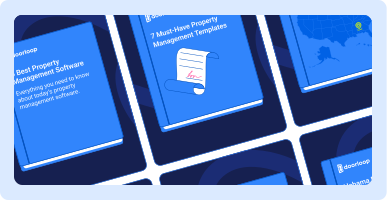
Dashboard interface showing financial data with sections for Profit & Loss, Rent Collected by tenants, Prospects Funnel statistics, and Unpaid Rent details, alongside a navigation menu on the left.What is DoorLoop?
Simplify, automate, and grow your portfolio with the all-in-one property management software.
Visit Homepage
Digital marketing banner showing a landlord’s eviction guide and a budgeting season blog post with a man working on a laptop.Free resources library
Expert whitepapers, webinars, ROI calculators, rental laws, forms and more—completely free.
Explore Resources

Spend less time managing,
and more time growing

Schedule A Demo →

Why DoorLoop?
Our customers know best.

Woman with long blonde hair wearing a bright pink blazer and white top sitting on a beige chair.
“DoorLoop saves me a lot of time. It has all the information that I need.”
Blonde woman wearing a pink blazer and necklace, posing indoors with a blurred background.

Debra Sever

OWNER

10 - 50 Units

Smiling man with beard wearing a black polo shirt giving a thumbs-up in front of a brick fireplace.
“DoorLoop saves me approximately 20-25 hours per week.”
Smiling man with a beard wearing a dark shirt and holding a drink in a wooden paneled room.

Chris Lumbu

CEO & FOUNDER

100 - 500 Units

Bald man with a white beard wearing a patterned shirt and brown jacket sitting in a room with dark patterned wallpaper.
“I would rate them a 10 out of 10. Actually that’s not fair, a hundred out of ten.”
Smiling man with beard and mustache wearing a dark shirt in an indoor setting.

Andrew Harrison

COO

500 - 1,000 Units

ALWAYS PUTTING THE CUSTOMER FIRST  

So many awards, we can’t count them