



ClickCease

No items found.
No items found.

Check your email or
click here to download now

Check your email or
click here to download now

View More Resources

The Landlord's Guide to Squatter's Rights

Everything you need to know about dealing with squatters and getting your property back.
Squatter's Rights: What You Need to Know
A Complete Guide to Dealing with Squatters
Everything you need to know about dealing with squatters and getting your property back

Table of Contents

What Is a Squatter?03
Squatting vs. Trespassing04
Can You Forcibly Remove a Squatter From Your Property?05
What Is Adverse Possession?06
How to Protect Yourself From Squatters: 3 Tips08
How to Remove Squatters From Your Property12
How the Eviction Process Works15
Resource: Squatters and Eviction Laws by State17
A Note on Local and State Laws:

Before we begin, it's important to mention (and you'll hear us mention this a lot):

Every state and local municipality's laws regarding squatters and the eviction process are different.

You should learn what your local laws are before taking any kind of legal action such as evicting a squatter.

Refer to the end of this whitepaper for resources on finding squatter rights and laws for every state.

People moving boxes
02

What Is a Squatter?

Even if you basically know what a squatter is, it's useful to know the legal definition of a squatter and how it differs from other common terms that are similar to squatting.

Simply: a squatter is someone that moves into a residence that is unoccupied or abandoned without permission.

The key is that it's done without the lawful permission of the owner of the property. At least at first.

With that said, it's a good time to talk about the difference between squatting and trespassing.

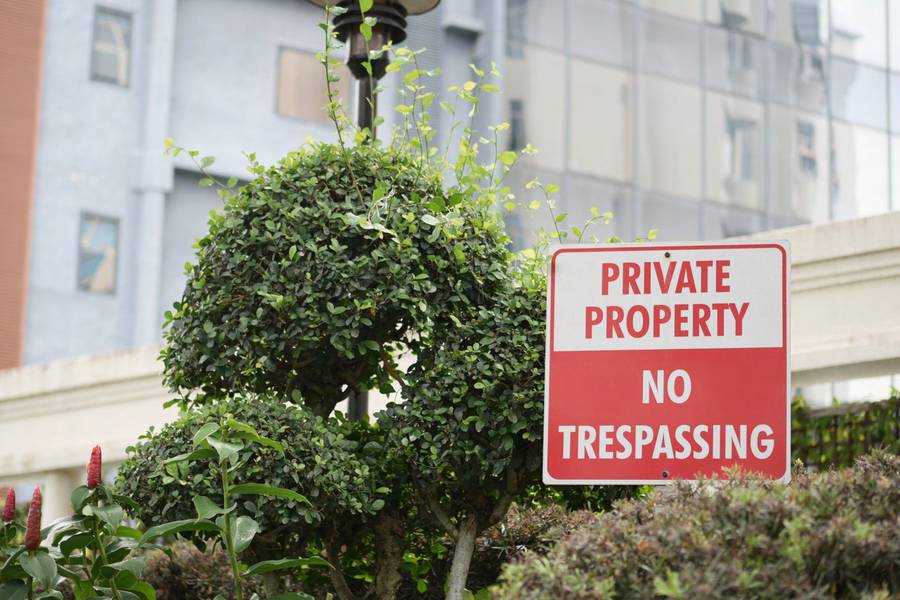
No Trespassing sign
03

Squatting vs. Trespassing

So, what is the difference?

Squatters aren't automatically trespassers.

  • That is to say, someone can squat on your property legally or illegally, depending on whether you can make a case that they have occupied your property illegally.
  • If you as the landlord prove that someone is occupying your property illegally, they are considered trespassers and can be legally evicted in most states.
  • However, if you can't prove they're trespassing, many states will recognize that squatter's legal right to occupy the property under the right conditions.
  • It's also important to keep in mind that the occupant might falsely claim through forged documentation that they have a right to occupy the property, which may be enough to give them claim over the property in some states.
  • The important part to keep in mind here is that squatting can be civil or uncivil in nature depending on whether you can prove that occupant is trespassing or not.

04

Can You Forcibly Remove a Squatter From Your Property?

With the above in mind, the answer is straightforward:

  • If you can prove that a squatter is illegally occupying the property, you can typically legally evict the tenant.
  • However, it requires that you go through the right legal channels such as your local court system to receive a court-ordered eviction first.
  • At the risk of sounding like a broken record, it's important to keep in mind that every state has different laws regarding squatting.
  • Some states, such as California, are extremely lenient toward squatters and err more on their side.
  • Many more states, such as New Jersey, err on the side of the landlord.
  • In NJ, there is no policy specific to squatters, but you can evict anyone including a squatter immediately if they refuse to pay rent.
05

What Is Adverse Possession?

At this point, it's important to talk about adverse possession as it's the centerpiece in terms of dealing with squatters.

Adverse possession allows a squatter to gain ownership of a property under certain conditions. As crazy as it sounds, in many states this is something you need to watch out for.

However, if you take the right steps to protect yourself, it's generally nothing to worry about.

According to U.S. law, an adverse possession claim can be made if all four of these conditions are met:

The possession must be:

⚔ Hostile
The property has been occupied without permission of you, the owner.
🏠 Actual
The occupation must be in a way that the squatter acts as though they actually own the property.
👁 Open & Notorious
Openly occupying the property, not hiding possession of it.
🔄 Exclusive & Continuous
Must occupy the property alone, not with other tenants or with the owner, and do so over a certain period of time.
06

These are all pretty vague, so let's break each down a bit more:

1. Hostile possession

Hostile possession sounds odd, but it means that the squatter has taken possession of the property without permission. The definition of hostile possession, more than any of the other aspects of adverse possession, differs based on the state.

So, make sure to check with your state and local laws what constitutes hostile possession of a property in your area before taking any sort of action.

2. Actual possession

Actual possession requires that the squatter physically occupy the property. In addition, they must behave in a way that they actually own the property.

This can be shown in a few different ways depending on the state, including documentation showing:

  • Repairs on the property
  • Updates or beautification efforts to the property
  • General upkeep efforts such as landscaping and maintenance for HVAC systems

3. Open and notorious possession

Open and notorious simply refers to the fact that the squatter is openly occupying the property and not hiding it.

If you reach out to inquire, the squatter must not attempt to hide their occupation of the property, otherwise, in most states, this would then not constitute adverse possession.

07

Exclusive and continuous possession

  • The squatter must be the sole person in possession of the property — no one else can share possession with the occupant including other squatters or tenants.
  • The squatter must also be able to prove that they have occupied the property for a specific period of time uninterrupted. In California, for example, that length of time is 5 years.
  • Keep in mind that not every state has the same provisions for adverse possession. See your state's local laws to verify how your state defines adverse possession.
  • Check out the end of this whitepaper for resources to help you find your state's squatter laws and adverse possession policy.

How to Protect Yourself From Squatters: 3 Tips

The best policy for dealing with squatters is to protect yourself proactively.

By protecting yourself in advance, you reduce the chance of having to deal with squatters in the first place.

And, in the case that you do end up with squatters, you'll be able to take swift action to remove them in the most efficient way allowed by your state.

Property management
08

1. Make sure the property is actively managed

Whether you currently need the rental income the property could be generating or not, it's important to make sure that your properties are actively managed.

You could do this internally or through a property management company. Regardless of how, though, the key is that the property is being checked regularly and maintained.

More often than not, a property obtains squatters when it isn't actively managed.

There are a few ways this can happen:

  • Squatters will trespass between leases because you've taken too long to bring in a new tenant
  • An old tenant's lease runs out and becomes a tenant-at-will and begins to assume possession by paying for maintenance, repairs, and if you're not careful, even property taxes
  • Or you simply let the property sit while waiting for property values to go up when you don't need the rental income (and not wanting to deal with renters)

The more often the property is occupied by renters you put there and actively managed through proper lease agreements and regular inspections, the fewer opportunities that squatters have of taking foot in the property one way or another.

09

2. Pay property taxes (on time)

As crazy as it may sound, in many states, someone with the intention of squatting could pay property taxes right under your nose as a way of claiming possession of the property.

Forget for a few years and don't get hit with an audit? That occupant could do it for you and turn around and lay claim to the property, assuming they've paid property taxes for the length of time outlined by that state's adverse possession laws.


3. Physically secure the property and put up signs if it is currently unoccupied

We touched on this a moment ago, but if the property is physically unoccupied for any length of time, it is far more likely to attract squatters.

To combat this, another step you can take is to physically board up the property and install security measures to secure it.

In addition to this, you can put up physical signs warding off trespassers as an additional measure. Instead, you can put up a sign for your security system making it clear that the property is protected without making it obvious that the property is unoccupied.

Securing a property
10

4. Do not allow subletting

Lastly, make sure that your lease clearly states that subletting is not allowed.

Why can this become a problem?

Subletting allows your renter to sublease the property, typically a part of the property such as a room or backhouse, to another tenant.

The reason you want to avoid this is simple: you didn't select the tenant, so that tenant didn't go through your normal tenant screening process.

That means the sublessee of your first-level tenant may have a criminal record, eviction history, or something else that would have led to you rejecting them.

However, because you did not choose them, you're not aware of that. And yet, they still occupy your property and are just as worthy of becoming squatters in the future.

Tenant screening
11

How to Remove Squatters From Your Property

Now, let's talk about reactive measures.

What if you currently have a squatter and need to know how to handle them? There's a lot you can do depending on the state the property resides in, so no need to worry just yet.

The important part is that you haven't waited too long before taking action. The more time that goes by, the more right that squatter has to take adverse possession of the property if they choose to fight you for it.

Here are some tips for removing squatters from your property:


1. Hire a rental attorney

The first step should always be to contact a rental attorney, unless you've gone through this process before and are confident you can handle it yourself.

The reason is that you want to make sure you're confident about your local laws so that you don't misstep. A misstep in the case of a squatter and evictions can mean big trouble if the squatter knows what they're doing and decides to take advantage of your mistake.

A rental attorney is an expert in all things rental property law, so they'll be able to advise you on the best course of action. Having said that, landlords who are well-versed in their local laws can typically handle evictions on their own.

12
Landlord discussing with tenant

2. Offer to lease with the squatters or pay to leave

The next step you'll likely want to take in most cases is to offer to lease the property to the squatters.

Depending on your state, you may not want to do this because evicting a tenant is generally harder than evicting a squatter. And a tenant that was a squatter isn't likely to be a good tenant.

In any case, resolving things peacefully could save you a ton of headache.

Another similar option is to offer to pay them to leave.

While you don't ever want to have to do this, if the squatter agrees to a small payout much lower than the amount you expect to lose in rental income during the eviction process, it can be preferable.

13

3. Serve a written notice to the squatter

The next step in virtually every case is to serve a written notice to pay-or-quit. This notice will state that the squatter has a specific number of days to enter into a lease agreement with you or else you will take legal action to remove them from the premises forcefully.

How much notice you'll need to give depends on your state's eviction laws (some don't even require notice, but most do).

After that notice has been given and you wait the required number of days, you typically then must issue an eviction notice. You'll then need to wait a certain number of days to actually be able to evict the squatter, so it's important to start this process as soon as possible.


4. Contact local authorities to remove the squatter

We touched on the eviction process above, but let's talk about it in a bit more detail to give you a better idea of what to expect.

This is closely tied with the process of dealing with squatters, as in most cases, you'll need to evict them to remove them from the property.

Every state's eviction process is a little different, but as opposed to squatters' rights across states, there are only minor differences in how the eviction process needs to be handled.

However, you may also prefer to offer the squatter to lease with you to make them into a tenant. This isn't necessarily recommended, as once you make them into a tenant they become much more difficult to remove.

14

How the Eviction Process Works

We touched on the eviction process above, but let's talk about it in a bit more detail to give you a better idea of what to expect.

This is closely tied with the process of dealing with squatters, as in most cases, you'll need to evict them to remove them from the property.

Every state's eviction process is a little different, but as opposed to squatters' rights across states, there are only minor differences in how the eviction process needs to be handled.

With the exception of differing notice periods, this is generally how the eviction process is handled throughout the U.S.:


1. Deliver notice to pay-or-quit

In virtually every state, you need to serve the occupant with a notice to pay-or-quit. Depending on the state, the notice period is typically around 3–14 days in length.

If you've proven the squatter to be occupying the property illegally, you'll typically be able to bypass this and move straight into the eviction process.

However, you may also prefer to offer the squatter to lease with you to make them into a tenant. This isn't necessarily recommended, as once you make them into a tenant they become much more difficult to remove. However, it is an option that a rental attorney may present to you.

15

2. Deliver eviction notice

An eviction notice is a notice of intent to evict, to put it simply.

In most states, an eviction notice period isn't necessary and you can move straight to filing for eviction after delivering the notice. In some states, however, you must give the occupant a notice period of anywhere from 3–15 days to leave the premises or be forcefully removed.

In most states, you can simply deliver the eviction notice without a waiting period — the process is pretty straightforward.


3. File for eviction

After delivering your eviction notice, it's time to file for eviction with your local court. It's important to bring anything you have with regard to documentation to prove that the squatter is located on your property illegally.

4. Occupant leaves or is removed by court-ordered date

Once, and assuming, you win your case you're given a court-ordered eviction date. If they don't leave, you can typically contact your local authorities to forcefully remove them after about 24 hours depending on your local laws.

To learn more about the eviction process as well as to find out your state's specific eviction laws, check out our whitepaper on evictions from the same series: The Landlord's Guide to Evictions.

16

DoorLoop

DoorLoop is an all-in-one property management software that makes managing your entire portfolio easier. Handling an eviction is hard, but you can reduce the chance of having to evict tenants and increase your occupancy rate with tools such as:

  • Automated rent collection
  • Late payment reminders
  • Comprehensive background checks with TransUnion SmartMove
  • Maintenance management tools
  • Automatic rental listings
  • And much more

Sign up for a free demo of DoorLoop and see what it can do for you.

DoorLoop

This content is provided for informational purposes only. It does not constitute legal advice and should not be relied upon as such. Laws differ by jurisdiction. For advice specific to your situation, please contact a local attorney, accountant, or expert.


This content is provided for informational purposes only. It does not constitute legal advice and should not be relied upon as such. Laws differ by jurisdiction. For advice specific to your situation, please contact a local attorney, accountant, or expert.

Loading PDF…

Managing properties?
Explore the world of DoorLoop

Smiling person wearing a doorloop shirt and headset standing with arms crossed next to a digital display showing rent collected on 9/2/2024 as $3,200.00 paid and on 9/1/2024 as $2,400.00 paid.Visit our blog
Get insider property management tips, industry insights, and practical guides for growing your portfolio.
Visit Blog
Dashboard interface showing financial data with sections for Profit & Loss, Rent Collected by tenants, Prospects Funnel statistics, and Unpaid Rent details, alongside a navigation menu on the left.What is DoorLoop?
Simplify, automate, and grow your portfolio with the all-in-one property management software.
Visit Homepage
Digital marketing banner showing a landlord’s eviction guide and a budgeting season blog post with a man working on a laptop.Free resources library
Expert whitepapers, webinars, ROI calculators, rental laws, forms and more—completely free.
Explore Resources

Spend less time managing,
and more time growing

Schedule A Demo →

Why DoorLoop?
Our customers know best.

Woman with long blonde hair wearing a bright pink blazer and white top sitting on a beige chair.
“DoorLoop saves me a lot of time. It has all the information that I need.”
Blonde woman wearing a pink blazer and necklace, posing indoors with a blurred background.

Debra Sever

OWNER

10 - 50 Units

Smiling man with beard wearing a black polo shirt giving a thumbs-up in front of a brick fireplace.
“DoorLoop saves me approximately 20-25 hours per week.”
Smiling man with a beard wearing a dark shirt and holding a drink in a wooden paneled room.

Chris Lumbu

CEO & FOUNDER

100 - 500 Units

Bald man with a white beard wearing a patterned shirt and brown jacket sitting in a room with dark patterned wallpaper.
“I would rate them a 10 out of 10. Actually that’s not fair, a hundred out of ten.”
Smiling man with beard and mustache wearing a dark shirt in an indoor setting.

Andrew Harrison

COO

500 - 1,000 Units

ALWAYS PUTTING THE CUSTOMER FIRST  

So many awards, we can’t count them