Everything you need to know to help you handle finding new clients make sure you secure your investment.
Before you can attract new clients in property management, it’s essential to understand who your target audience is.
Identifying your target market involves conducting research to determine the characteristics and preferences of your ideal customer.
Below we will highlight some strategies for understanding your target audience.
Start by looking at your current customer base and analyzing their demographics, psychographics, and behavior. Consider factors such as age, income, location, lifestyle, and preferences.
Once you have identified your target market, you need to understand their needs and preferences.
Consider their pain points, goals, and motivations when it comes to property management. Are they looking for convenience, affordability, luxury, or something else?

Once you understand your target audience, you can develop marketing strategies that resonate with them.
This may involve creating targeted ads, using specific keywords, or developing content that speaks to their unique needs and preferences.
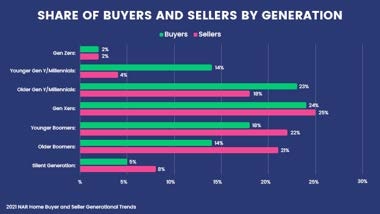
Different generations have different preferences and needs when it comes to property management.
For example, millennials may be looking for sustainable and tech-savvy living options, while retirees may prioritize amenities such as proximity to healthcare facilities and low-maintenance living.
Taking the time to research and analyze your ideal customer can create effective marketing campaigns that speak directly to their needs and preferences.
In property management, a strong brand can help attract new clients and differentiate your business from competitors.
Developing a brand involves defining your values, message, and image, and consistently communicating that brand across all platforms, which can help establish trust with potential clients and communicate your unique value proposition.
Let’s discuss some strategies for developing a strong brand in property management.
Your brand message and values should communicate your unique selling proposition and why clients should choose your business over competitors.
This may involve identifying your core values, mission statement, and unique features and benefits.
Consistent branding is also essential for establishing recognition and trust with clients. Ensure that your branding is consistent across all platforms, including your website, social media, marketing materials, and physical spaces.
Effective branding in property management involves communicating your brand message and values in a visually appealing and compelling way.
Here are some examples of what this entails:
Developing a strong brand in property management requires a deep understanding of your business values and message, as well as the preferences and needs of your target audience; it can establish recognition and trust with potential clients and differentiate your business from competitors.
In today’s digital age, a strong online presence is essential for attracting new clients in property management.
An effective online presence can help establish credibility, provide valuable information to potential clients, and differentiate your business from competitors.
A strong online presence can help potential clients find your business and gain valuable information about your services, properties, and values. A well-designed website and engaging social media presence can also help establish credibility and build trust with potential clients.
There are many things that you can do to build a strong online presence, some of these include:
… let’s further discuss these below.
Your website is often the first point of contact for potential clients. Ensure that your website is easy to navigate, mobile-friendly, and provides all the information potential clients may need, such as property listings, pricing information, and contact information.
Consider using high-quality images and videos to showcase your properties and amenities.
Social media can be a powerful tool for building relationships with potential clients and establishing your brand voice.
Create engaging and relevant content that speaks to your target audience and provides value. This may include property photos and videos, industry news and trends, and tips for renters or property owners.
SEO can help improve your website’s visibility on search engines like Google, making it easier for potential clients to find your business. Use targeted keywords, create valuable content, and optimize your website’s structure and metadata to improve your search engine rankings.
Here are some things you can implement to ensure an effective online presence:
Creating a strong online presence in property management requires a strategic approach that considers the needs and preferences of your target audience.
Doing this is certain to attract new clients and establish your business as a trusted authority in the industry.
Referral marketing is a very effective way to attract new clients in property management.
When current clients refer their friends and family to your business, it can help establish trust and credibility with potential clients. In this section, we will highlight some strategies for leveraging referral marketing in property management.
Referrals are important in property management for several reasons. First, they can help establish trust and credibility with potential clients who may be hesitant to work with an unfamiliar property management company.
Second, referrals can be a cost-effective way to attract new clients, as you do not have to spend money on advertising or marketing to reach them.
Finally, referrals can lead to long-term relationships with clients who are satisfied with your services and may refer others in the future.
Creating a referral program for current clients can encourage them to refer their friends and family to your business.
Here are some tips for creating an effective referral program:
Positive reviews and testimonials can also be a powerful form of referral marketing.
Ask clients for feedback after providing services, and follow up with those who are satisfied to request a review or testimonial.
You should also make it easy for clients to leave reviews or testimonials, such as by providing links to your business’s profile on review sites like Yelp.
Highlighting positive reviews and testimonials on your website and social media pages to showcase your satisfied clients is also highly recommended.
Some examples of successful referral marketing in property management include:
Leveraging referral marketing in property management can help you attract new clients and establish long-term relationships with satisfied clients, which will take your business a long way.
In property management, building relationships with prospects is crucial to attracting and retaining clients.
Building effective communication strategies, practicing exceptional customer service, and staying top-of-mind are all keys to successful relationship building.
Effective communication strategies involve understanding and responding to the needs of clients. You should be responsive and available to answer any questions or concerns that prospects may have.
Providing exceptional customer service is another key aspect of relationship building in property management. You must strive to exceed expectations by going above and beyond to address client needs.
This can include practicing the following:
Staying top-of-mind with prospects is also important and don’t forget to maintain regular contact with prospects even after they have become clients.
This can entail sending newsletters, holiday greetings, or other informative content that keeps prospects informed and engaged.
Successful relationship building in property management includes:
Property managers who take the time to build strong relationships with prospects are more likely to attract and retain clients over the long term, setting them apart from the competition; so ensure that you are doing what’s right for your business.
As a property manager, providing value-added services to your clients is crucial to setting yourself apart from competitors and creating long-term relationships with clients.
Value-added services are those that go beyond basic property management tasks and provide additional benefits to clients. These services can help to increase client satisfaction, loyalty, and referrals.
Offering unique services that differentiate you from competitors is an effective way to provide value-added services. This can include services such as virtual property tours, online rent payment systems, and 24/7 maintenance support.
By offering these services, you can make the property management experience more convenient and efficient for clients, while also showcasing your expertise and dedication to client satisfaction.
Here are some value-added services that you can implement:
These services can help to increase client satisfaction, loyalty, and referrals, ultimately leading to greater success and growth for your property management business.
As a property manager, it is essential to track and analyze your marketing efforts to determine what is working and what is not.
By doing so, you can optimize your efforts to attract more clients and increase your revenue. Let’s discuss some reasons why tracking and analyzing your marketing efforts is crucial.
By tracking your marketing efforts, you can determine which strategies are generating the most leads and conversions. This will help you focus your marketing efforts on the most effective channels and tactics.
Tracking your marketing efforts allows you to measure the return on investment (ROI) of your marketing campaigns. You can calculate the cost of acquiring a new client and compare it to the revenue generated by that client to determine your ROI.
Analyzing your marketing data will help you make informed decisions about your marketing strategy. Just adjust your tactics based on what is working and what is not to ensure that you are getting the most out of your marketing efforts.
There are several tools available to help you track and analyze your performance. Here are some of the most common:
Once you have collected and analyzed your marketing data, it’s time to use that information to optimize your marketing efforts.
Below, we will discuss some strategies you can use for this.
A/B testing involves testing two different versions of a marketing campaign to determine which one performs better. You can test different headlines, images, calls to action, and other elements to see which version generates the most leads and conversions.
Retargeting involves targeting people who have already shown interest in your business. For example, if someone visits your website but doesn’t make a purchase, you can retarget them with ads on social media or other websites to encourage them to come back and complete their purchase.
Personalizing your marketing efforts can help you stand out from your competitors and make a stronger connection with your audience. You can use data to personalize your website content, email campaigns, and other marketing materials.
There are many things you can do to successfully track and analyze your data in property management, but here are some of our examples:
In conclusion, as a property manager, attracting new clients is critical to the success of your business.
To recap, some key takeaways from this guide include:
It’s important to remember that attracting new clients is an ongoing effort, and you must continually evaluate and adjust your marketing strategies to stay ahead of the competition.
By staying focused on providing excellent service and adding value to your clients, you can build a loyal customer base that will help grow your business through word-of-mouth referrals.
In the end, remember that success in property management is not just about attracting new clients but also retaining them.
Property management is a highly competitive industry, and attracting new clients is essential to sustaining and growing your business. However, it can be challenging to stand out in a sea of competitors, especially in the digital arena.
In this resource, we explored various strategies that property managers can implement to attract new clients. From understanding your target audience and developing a strong brand to leveraging referral marketing and providing value-added services, we provided actionable insights that can help you create a successful marketing plan.
By the end of this guide, you have a comprehensive understanding of how to attract new clients in property management and stand out in a crowded marketplace.
This content is provided for informational purposes only. It does not constitute legal advice and should not be relied upon as such. Laws differ by jurisdiction. For advice specific to your situation, please contact a local attorney, accountant, or expert.
Visit our blog
What is DoorLoop?
Free resources library

Debra Sever
OWNER
10 - 50 Units


Chris Lumbu
CEO & FOUNDER
100 - 500 Units


Andrew Harrison
COO
500 - 1,000 Units


.avif)
%20(1).avif)
.avif)
.avif)
.png)
%20(1).avif)
%20(1).png)
%20(1).avif)
%20(1).avif)
%20(1).avif)


.avif)
%20(1).avif)
.avif)
.avif)
.png)
%20(1).avif)
%20(1).png)
%20(1).avif)
%20(1).avif)
%20(1).avif)

%20(1).avif)
.avif)
.avif)
.avif)
%20(1).png)
.avif)
.avif)
%20(1).avif)
.avif)
.avif)
.avif)
.avif)
.avif)
%20(1).png)
.avif)
.avif)
%20(1).avif)
.avif)