




Multifamily marketing involves strategic activities to attract and retain tenants for residential buildings with multiple units. The five primary idea categories include Digital Marketing, Social Media, Resident-Driven Marketing, Lease-Up, and Seasonal/Creative tactics. Multifamily marketing efforts focus on maximizing occupancy and property revenue.
Digital tactics establish a strong online presence through search engine optimization and internet listing services. Social media marketing showcases amenities and resident life to build a relatable brand image for the building. Resident-driven initiatives activate the current community to generate low-cost referrals and positive public reviews. Lease-up strategies fill new developments rapidly through aggressive pre-leasing and community partnerships. Seasonal campaigns adapt the marketing message to match the natural moving cycles and holiday trends of multifamily marketing.
Modern property management software automates the execution of these promotional activities. Integrated features in PM software can manage listing syndication and prospect tracking from a single digital interface. Digital workflows handle the application and screening steps to prevent lead drop-off during the conversion process. Analytics features provide insights into channel performance to help owners allocate budgets effectively. Advanced reporting ensures every marketing dollar contributes to the success of the marketing campaign.
What Is Multifamily Marketing?
Multifamily marketing is the strategic process of attracting and retaining residents for a specific multifamily property in a specific submarket. Campaigns target local demographics based on income, lifestyle, and proximity to major employment hubs. Channels include organic search, internet listing services, social media profiles, and physical on-site signage. Strategy differs from single-family rentals because it relies on high-volume lease cycles and community amenities as primary assets. Effective marketing ensures high occupancy levels for apartment marketing and apartment communities while maintaining leasing and property management through multifamily marketing.
Digital Marketing Ideas for Apartments
Digital marketing serves as the primary channel for generating high-intent rental leads in modern markets. Building a strong online presence ensures the community appears where prospects start their research. Internet listing services and search engine ads provide immediate volume during occupancy gaps.
1. Optimize the Property Website for Local SEO
Property websites require optimization for specific neighborhood keywords and city-level search terms. Local search visibility relies on consistent name, address, and phone number (NAP) data across all web directories. Claiming the Google Business Profile can provides an immediate visibility opportunity in the local search "map pack" for nearby searchers. Fast improvements involve fixing core web fundamentals and adding schema markup for apartment listings. Local search engine optimization can deliver the lowest cost-per-lease by capturing prospects via the "free" traffic of organic search.
2. Run Google Search Ads for High-Intent Keywords
Google Search ads target users searching for terms like apartments for rent in specific neighborhoods. Campaigns focus on high-intent phrases that signal a prospect is ready to move within the month. Ad groups should be structured by community to ensure the copy matches the specific unit features. Negative keyword lists prevent wasted spend on irrelevant queries like hotels or house sales. Paid search provides a reliable way to drive traffic to the main website for apartment communities.
3. List on the Top Internet Listing Services (ILSs)
Major internet listing services (e.g. Apartments.com, Zillow) dominate the initial phase of the renter journey. Communities gain visibility by maintaining active profiles on multiple high-traffic websites. Owners or property managers can evaluate the cost per lease for each source to identify which channels provide the best return.
4. Build a Retargeting Funnel
Retargeting funnels reach prospects who previously visited the property website but did not apply. "Tracking pixels" on the property website will identify prospects and classify them into specific audience segments, such as "users who viewed floor plan pages", etc. Ad campaigns can then be created to show to these segments. Ad creative variations remind visitors of the amenities or limited-time move-in specials. Automated remarketing helps to keep the property top-of-mind during the long research phase of apartment hunting.
5. Use Programmatic Display Ads
Programmatic display ads reach potential renters based on their physical location and browsing history. Some examples of this tactic could be: targeting individuals currently living in nearby submarkets with older housing stock, targeting users who recently searched for moving companies or furniture stores. Creative ad formats include banners and video ads. Geofencing can help ensures the marketing budget reaches people with a high probability of relocating to local apartment communities.
6. Add Virtual Tours and 3D Walkthroughs to Listings
Virtual tours provide a digital experience that allows prospects to explore units from any device. High-quality 3D walkthroughs reduce the need for initial screening calls and physical visits. Matterport 3D walkthroughs and other video formats integrate can integrate into property websites and internet listing services. Social media posts featuring tour clips drive higher engagement and click-through rates to rental applications. Engaging content like this helps out-of-town prospects feel confident in signing a lease.
Social Media Marketing Ideas for Apartment Communities
Social media marketing websites provide a space to showcase the community lifestyle and local neighborhood benefits. Content focuses on resident experiences rather than just floor plan availability and pricing. Visual storytelling builds a brand identity that attracts prospects looking for a specific community vibe. Regular posting maintains an active presence that signals a well-managed and vibrant property. Effective social strategies turn passive observers into active participants in multifamily marketing.
7. Showcase Amenities Through Short-Form Video
Short-form videos on Instagram Reels and TikTok highlight the most attractive property amenities (such as a pool, fitness center, rooftop lounge, or pet park). Production requires only a smartphone and good lighting to create authentic and engaging clips. Daily or weekly posting cadences keep the community visible to local scrollers and prospects.
8. Highlight Resident Stories and Testimonials
Resident testimonials share authentic experiences from people currently living in the building. Formats include short video interviews or photo posts with a written quote about the community. Day-in-the-life reels show how residents use the amenities and interact with the local neighborhood. Sourcing these stories requires resident consent and often involves incentives like small gift cards. Social proof builds trust and encourages new leads to move forward with leasing.
9. Post Neighborhood Guides and Local Spotlights
Neighborhood guides highlight local coffee shops, parks, and restaurants within walking distance. Content focuses on the benefits of the location to attract prospects interested in the area. Partnering with local businesses for spotlights provides cross-promotion opportunities for both brands. Search engines index these local guides, which helps the property rank for nearby-rental queries. Positioning the property as a neighborhood expert adds value to the apartment marketing.
10. Run Instagram and Facebook Lead Ads
Instagram and Facebook lead ads use built-in forms to capture prospect contact information easily. Qualification questions filter out low-intent leads before they reach the leasing team. Direct integration with the CRM ensures that new inquiries receive an immediate follow-up. Advertisers track the cost-per-lead to compare social performance against other digital channels. Paid social ads can provide a steady stream of new prospects for the leasing office.
11. Build a Community Hashtag and User-Generated Content Campaign
Community hashtags encourage residents to share their own photos and videos of property life. Reposting user-generated content with permission provides authentic marketing material at no cost. Monthly recap posts featuring the best resident photos build a sense of belonging and pride. Residents can become active brand ambassadors through the use of these apartment community hashtags.
Resident-Driven Marketing Ideas
Current residents serve as a powerful and cost-effective source of new rental leads. Programs that activate the existing community reduce the reliance on expensive paid advertising. Word-of-mouth marketing carries more weight than traditional ads during the prospect decision process. Success depends on maintaining a high standard of service that residents want to share with multifamily marketing.
12. Launch a Resident Referral Program
Resident referral programs offer incentives for current tenants who bring in new neighbors. Incentives include rent credits, cash bonuses, or gift cards. Legal compliance requires checking state-specific limits on referral fees paid to non-licensed individuals. Tracking software ensures that every referral is documented and paid out upon a signed lease. Referral leads typically convert at higher rates because they arrive with a built-in trust from word-of-mouth.
13. Solicit Positive Reviews
Online reviews on sites like Google and ApartmentRatings influence the property's reputation. Soliciting reviews can help boost the rating on those sites. Timing the request for a review after a successful maintenance, repair, or lease renewal can increase the chance of a positive response. Responding professionally to negative reviews demonstrates that management values resident feedback. Active review management is a core task for successful property management.
14. Host Resident Events
Resident events (food truck nights or fitness classes) create opportunities for social media content. Filming the gatherings showcases a vibrant community culture to prospective renters online. Public-facing events allow the neighborhood to experience the property amenities first-hand. Capturing leads at the door through sign-in sheets builds a database for future outreach. Social gatherings strengthen bonds among neighbors and improve the apartment marketing.
15. Promote Resident Renewals
Renewal campaigns target residents sixty to ninety days before their lease expiration date. Incentives like rate holds or unit upgrades encourage long-term stays and reduce turnover. Consistent communication through email and app notifications keeps the renewal option visible. Retention marketing is far less expensive than acquiring a new resident from the open market. Successful renewal strategies maintain high occupancy levels for apartment communities.
Lease-Up Marketing Ideas for New Communities
Lease-up marketing focuses on filling a new community within a short timeframe. Strategies begin months before the first unit is ready for occupancy. High-volume acquisition tactics ensure the property reaches its occupancy goals quickly. New developments rely on brand awareness and aggressive incentives to attract early adopters. Aggressive outreach and pre-leasing efforts are standard for marketing new multifamily complexes.
16. Build a Pre-Leasing Waitlist
Pre-leasing waitlists capture interested prospects before the building is even finished. Landing pages with email signup forms collect contact data for future email marketing. Offering priority unit selection to waitlist members encourages early commitment and signups. Nurturing the list with construction updates keeps the property top of mind for movers. A strong waitlist provides a head start for the final phase of leasing.
17. Offer Move-In Concessions Strategically
Strategic move-in concessions attract prospects who might otherwise wait for a later phase. Common offers include a free month of rent or waived application and amenity fees. Heavier concessions apply during the early stages of a lease-up to build immediate momentum. Tapering the incentives as occupancy climbs protects the long-term revenue of the asset.
18. Host a Grand Opening Event
Grand opening events introduce the new community to the surrounding neighborhood and local brokers. Open house formats with food and raffles encourage foot traffic and tour bookings. Partnering with local brands for the event adds a lifestyle element to the experience. Following up with every attendee ensures the event leads to actual lease applications. Large-scale events generate significant buzz for new apartment communities.
19. Partner with Corporate Relocation and Local Employers
Partnerships with local employers provide a direct channel to employees relocating for work. Preferred-employer programs offer special concessions or waived fees for company staff. Working with relocation agencies helps fill units with high-quality, professional tenants. Marketing materials distributed in employee breakrooms or on intranets drive targeted traffic. Corporate relationships canbuild a stable base of residents for the property for years to come.
20. Use Construction Site Signage and Local Outreach
Construction site signage captures the attention of commuters and locals passing by daily. QR codes on banners link directly to the waitlist or pre-leasing landing page. Neighborhood door-hangers announce upcoming opening dates and exclusive early-look offers. Local outreach builds rapport with nearby businesses and residents before the opening. High-visibility physical signage is a basic requirement for any new multifamily marketing campaign.
Seasonal and Creative Marketing Ideas
Seasonal marketing campaigns align with the natural ebb and flow of the rental market. Creative themes refresh the property image and prevent marketing fatigue among prospects. Outreach changes to match the specific needs of renters during peak and slow months. Unique angles like pet-focused promotions help the community stand out from competitors. Adaptive strategies ensure the property remains relevant throughout the entire year for multifamily marketing.
21. Run a Spring Leasing Campaign with Outdoor Themes
Spring campaigns focus on outdoor amenities and the return of warmer-weather activities. Themes include balcony plant kits or BBQ events to highlight the shared social spaces. Marketing efforts ramp up in March to capture the start of the peak moving season. Visuals feature blooming landscapes and residents enjoying the pool deck or gardens.
22. Offer Summer Move-In Specials
Summer specials address the high volume of movers and the increased market competition. Offers often include pool party invites or free moving truck rentals for new signers. Fee waivers for specific units help clear inventory before the school year starts. Promotions focus on the convenience of moving while the weather is ideal. Aggressive summer marketing maintains momentum through the highest supply periods for apartment communities.
23. Refresh Marketing for Fall and Winter Slow Seasons
Winter marketing focuses on indoor comforts and community warmth during the slow months. Holiday-themed events and decor make the property feel inviting to prospective renters. Concessions like longer lease terms at locked rates attract budget-conscious winter movers. Digital ads shift to highlighting cozy amenities like fireplaces or indoor lounges. Creative winter outreach helps bridge the gap until the spring peak for apartment marketing.
24. Create a Pet-Focused Marketing Angle
Pet-focused marketing targets the large demographic of animal owners looking for welcoming homes. Highlighting on-site features like pet parks and wash stations attracts these specific leads. Partnering with local vets or groomers for events builds community ties and trust. Pet-of-the-month social features encourage resident engagement and showcase property life. Positioning the building as pet-friendly is a major advantage for modern property management.
25. Launch a Local Influencer or Micro-Influencer Program
Local influencers share the property experience with their engaged and niche audiences. Micro-influencers with five thousand to fifty thousand followers provide the most authentic reach. Collaboration involves offering a free stay or a content fee in exchange for property posts. Influencer content provides high-quality lifestyle imagery for use on official channels. Authentic storytelling from local voices drives high-quality leads to apartment communities.
26. Partner with Local Brands for Co-Branded Events
Co-branded events with local businesses bring new foot traffic onto the property. Partnering with a neighborhood brewery or gym adds value to the resident experience. Cross-promotion on social media exposes the property to the partner brand audience. Shared events provide unique content for marketing materials and social posts. Local brand connections strengthen the property position within the local apartment marketing.
27. Use Direct Mail to Target Surrounding Apartments
Direct mail campaigns target renters in older buildings who might be ready for an upgrade. Postcards highlighting new amenities and move-in specials drive local traffic to the site. High-quality visuals of the property interiors stand out in a physical mailbox, and targeted lists ensure that the mailers only reach people currently paying rent nearby.
28. Try Geofenced SMS and Push Notifications
Geofenced marketing sends notifications to prospects when they are near competitor buildings. Short and compelling messages offer immediate reasons to tour the nearby property. Pushing alerts to prospects during their search captures attention at a critical moment. Location-based alerts provide a high-tech edge for competitive leasing.
29. Sponsor Local Community Events
Sponsoring local community events such as local 5Ks or farmers' markets builds brand awareness within the community. On-site activation at these events allows for lead capture and face-to-face interaction. Distributing branded swag or brochures keeps the property name in prospect homes. Supporting local causes creates a positive image for the building and management, and is a long-term investment in the reputation of apartment communities.
30. Host a Pop-Up or "Try Before You Lease" Experience
Pop-up experiences allow prospects to spend time in the clubhouse or common areas. Themed tour experiences like sunset rooftop drinks provide a memorable first impression. Short-stay options offer a trial period for those hesitant about committing to a lease. Hands-on experiences reduce the perceived risk of moving to a new community. Creative tour formats differentiate the property during the busy apartment marketing.
How to Build a Multifamily Marketing Plan
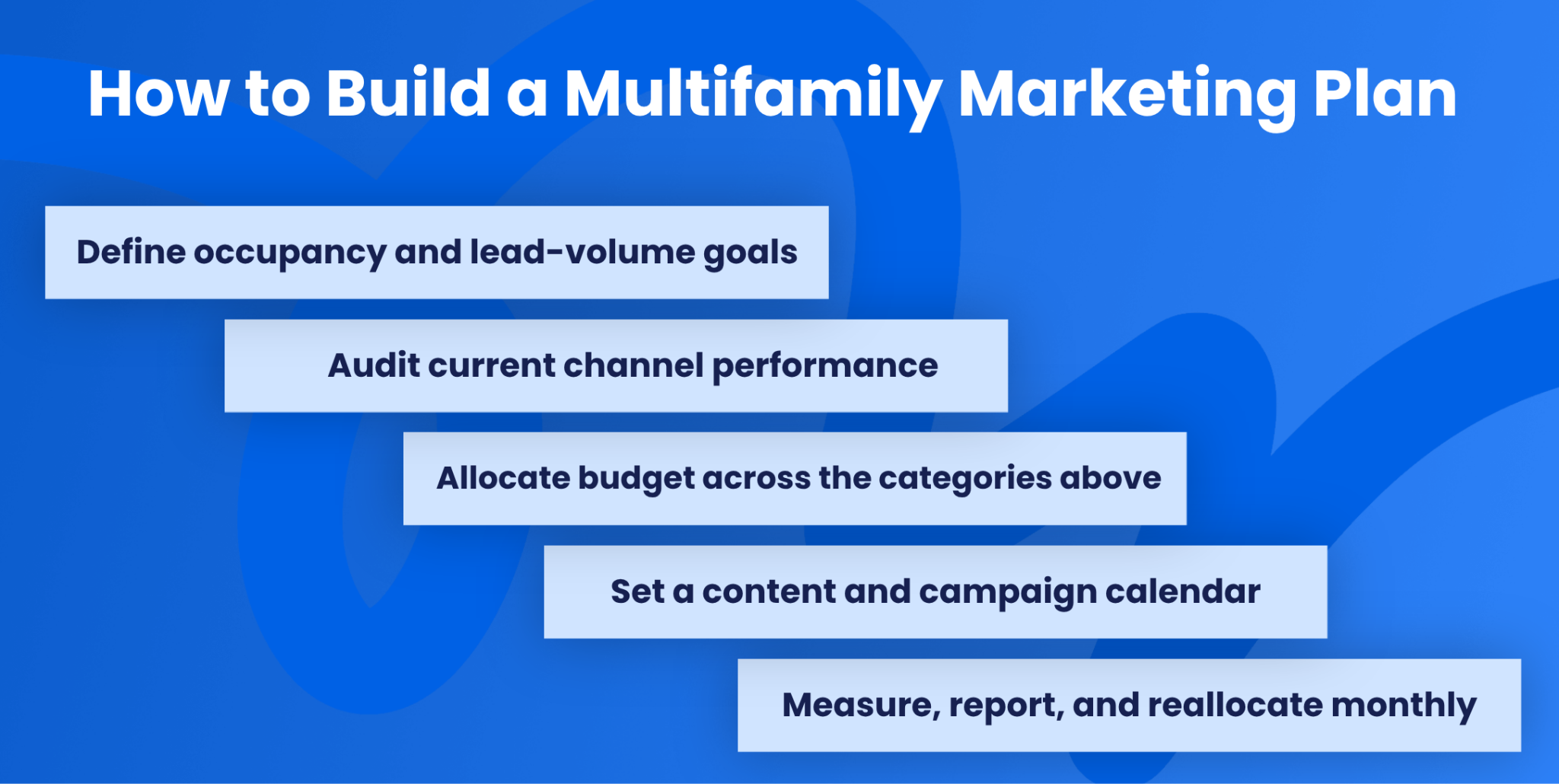
To build a successful multifamily marketing plan, follow the steps outlined below:
Define occupancy and lead-volume goals
Target occupancy levels determine how many new leases the team must sign monthly. Clear goals provide a benchmark for evaluating the success of the entire marketing strategy. Calculating the necessary lead volume requires understanding the current lead-to-lease conversion rate. Teams focus on high-intent leads to maximize the efficiency of the sales pipeline. Owners adjust the targets based on local market trends and seasonal fluctuations.
Audit channel performance
Reviewing cost-per-lead by source identifies which channels deliver the most value. Reallocating funds from poor performers to top channels maximizes the impact of the budget and prevent wasted spend on websites that generate low-quality inquiries.
Allocate budget
Spending splits between digital, social, and resident programs vary by property lifecycle. Lease-up assets require a higher initial investment in awareness and lead capture tactics. Established properties focus on lower-cost resident retention and referral programs. Balancing paid and organic efforts can ensure a steady flow of leads throughout the year.
Set a campaign calendar
A monthly campaign calendar organizes themes, seasonal events, and social media posting schedules. Advance planning ensures that all marketing materials are ready before a campaign begins. A structured schedule prevents marketing fatigue and keeps the community message fresh.
Measure, report, and reallocate monthly
Monthly reporting meetings review key performance indicators like applications and signed leases. Shifting budget to what works in real-time prevents wasted spend on ineffective ads. Data-driven decisions ensure the marketing plan remains agile and responsive to the market. Clear reporting provides accountability for the leasing team and property owners.
How Property Management Software Helps with Multifamily Marketing
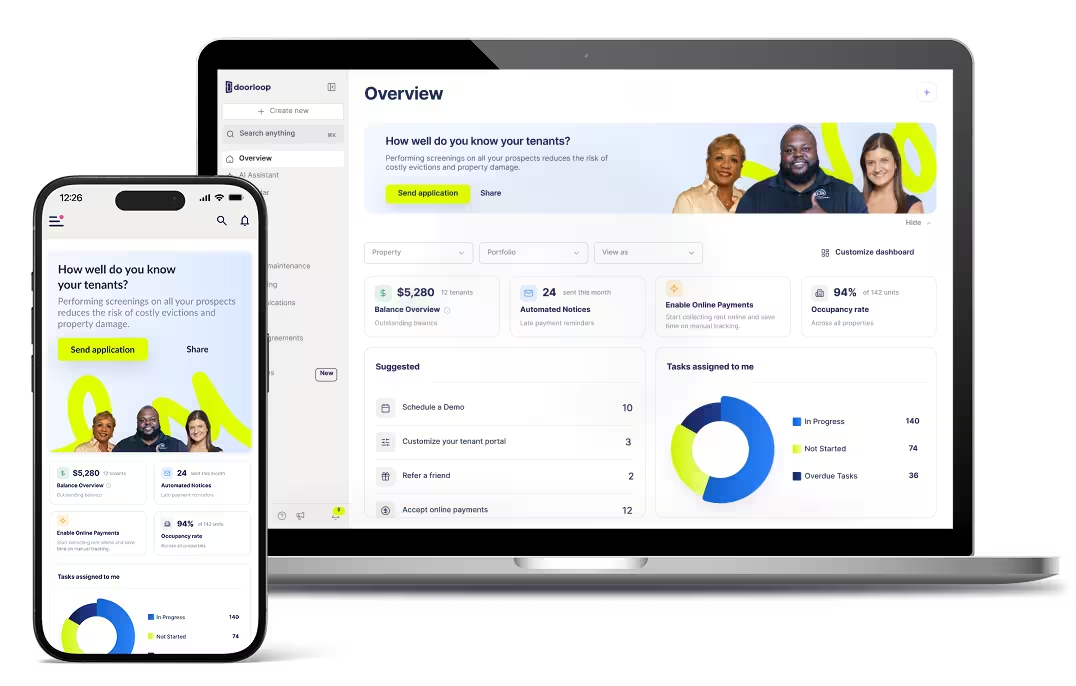
Property management software helps multifamily marketing by consolidating the entire leasing and retention pipeline into one system built for scale. It pushes listings to internet listing services (ILS) through multifamily-specific syndication setups. It can generate listing descriptions with AI across an entire portfolio at once rather than unit by unit. It can power a custom property website with an integrated tenant portal, a built-in CRM to track hundreds of concurrent prospects so no lead slips through the cracks, while marketing source tracking and per-channel attribution reveal which platforms and campaigns actually drive qualified applicants. Resident communication tools support retention marketing through renewal nudges and community messaging that keep occupancy steady. Finally, application funnel and lease automation move applicants from inquiry to signed lease across many units at once. Property management software like DoorLoop turn fragmented marketing efforts into a coordinated, measurable system that fills units faster and keeps them filled.
ILS Syndication
Digital tools syndicate listings to major rental sites like Zillow and Apartments.com automatically. Properties with five or more units follow specific rules for commercial advertising agreements. Missing one major listing site can cost dozens of qualified leads every month. Automated syndication ensures that every vacancy appears in front of the widest possible audience. Centralized management of these listings is a basic function of apartment marketing.
AI-Generated Listing Descriptions
AI tools generate consistent and professional listing descriptions for every unit in the portfolio. Maintaining a specific brand voice across hundreds of listings becomes a simple task. Distinct descriptions help floor plans rank better in search results and attract more clicks. Automatic generation reduces the time required to publish new vacancies to the market. Clear and compelling copy is essential for the success of leasing.
Custom Property Website With Tenant Portal Integration
Custom websites serve as a branded destination for conversion away from third-party sites such as Zillow/etc. Integrated portals allow prospects to apply and sign leases directly on the property website. Automated updates ensure that unit pricing and availability are always current for visitors.
Built-In CRM for Tracking Prospects
Built-in CRM systems store all prospect data centrally with clear visibility of the sales pipeline. Automated tasks remind leasing teams to follow up with leads in the middle of the funnel. Tracking hundreds of prospects manually leads to missed opportunities and lost revenue. Historical data allows for the re-engagement of old leads when new vacancies open up.
Marketing Source Tracking and Per-Channel Attribution
Source tracking tags every new inquiry with the specific channel that generated the lead. Identifying the actual cost-per-lease by channel allows for better budget management. Attribution data reveals which websites deliver the highest quality residents to the community. Reporting features provide a clear view of how every ad dollar contributes to occupancy.
Resident Communications for Retention Marketing
Centralized messaging tools reach residents through text, email, and the mobile portal. Retention marketing campaigns (renewal offers and community events) run through the channels. Every community update or event announcement builds a stronger bond with the tenants. Keeping residents informed reduces the risk of dissatisfaction and unexpected move-outs.
Lease Automation
Lease automation including automated funnels provide custom application links that move prospects through the process quickly. Integrated screening and e-signature features eliminate the need for physical paperwork. High-volume properties require a frictionless conversion process to maintain leasing momentum. Prospects perceive communities with modern digital applications as more professional and desirable.
Frequently Asked Questions
How much should an apartment complex spend on marketing?
An apartment complex spends 3% of its gross potential rent on marketing. Lease-up properties require a larger investment of five percent or more to fill units rapidly. Budgets fluctuate based on local market conditions and the need for immediate lead volume. Managing costs requires a deep understanding of the lead-to-lease conversion rate.
What social media platforms work best for apartments marketing?
Instagram and TikTok are the best platforms for sharing visual lifestyle content and amenities with younger renters. Facebook remains effective for targeted lead ads and community groups for current residents. Google Business Profile is a requirement for local discovery and managing online reviews and photos. Website choice must align with the specific demographic and lifestyle of the apartment communities.
Frequently Asked Questions