





A property manager oversees rental properties on behalf of owners to ensure operational success. Successful candidates for property manager position possess a mix of technical hard skills and interpersonal soft skills. Managers handle maintenance, leasing, and tenant relations across various building types. The role demands high levels of accountability and organization to protect the physical asset.
Technical proficiencies include accounting, regulatory knowledge, and marketing expertise. Interpersonal abilities like conflict resolution and negotiation help maintain positive relationships with residents and vendors. Software fluency allows professionals to track data and automate routine tasks for better efficiency.
What Does a Property Manager Do?
Property managers supervise the daily operations of real estate assets to maximize the return for the property owner. Day-to-day duties involve rent collection, maintenance coordination, and the screening of prospective tenants. Professionals manage building types such as residential apartments, multifamily complexes, commercial offices, and vacation rentals. Managers provide detailed financial reports to owners to track the performance of the investment. Legal compliance with local housing laws are also primary responsibilities of property managers. The role acts as a liaison between residents and the landlord to resolve disputes and requests.
For more information see our full artice: What does a property manager do?
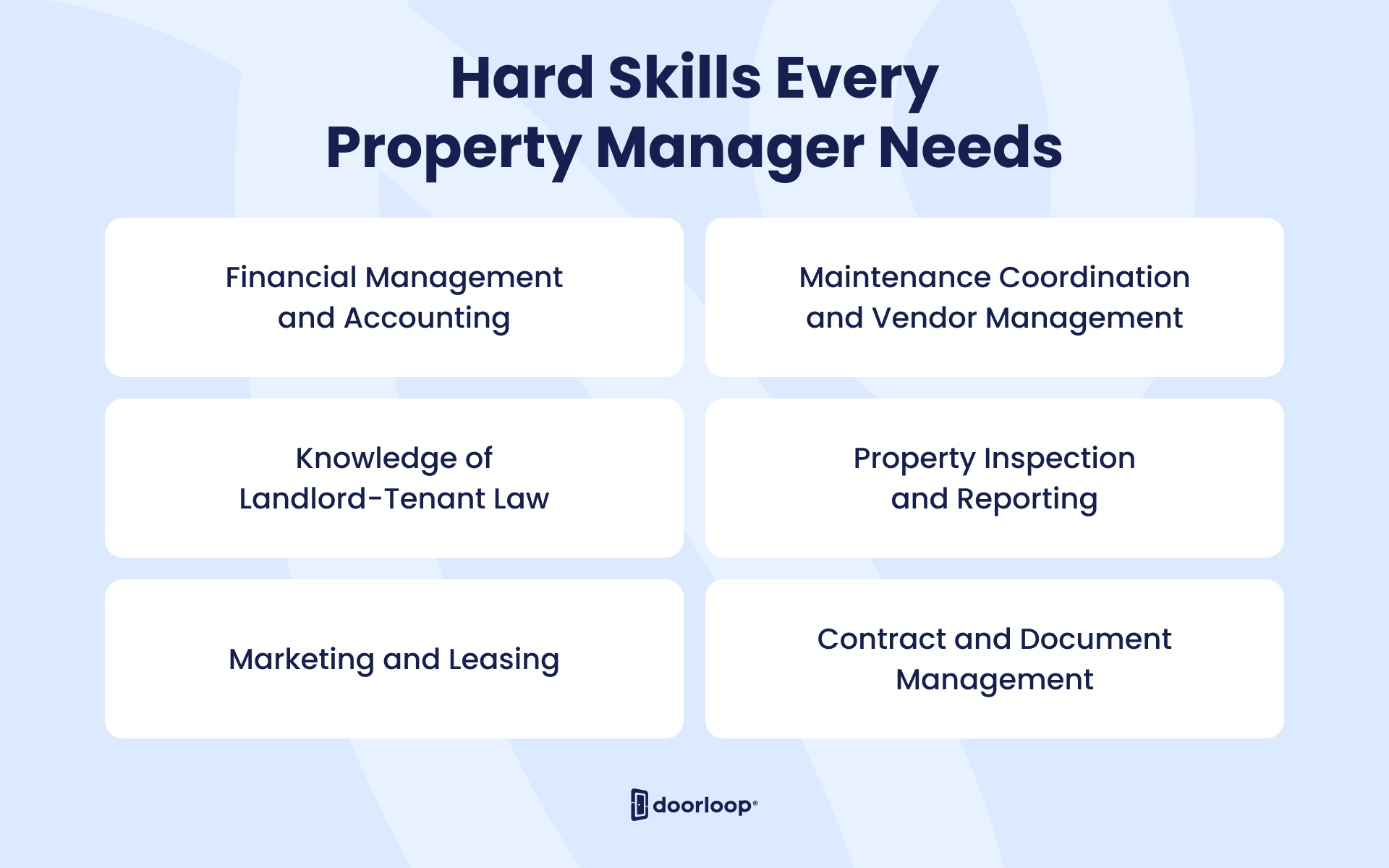
Hard Skills Every Property Manager Needs
Hard skills represent the technical and operational competencies that managers acquire through formal training and job experience. Accounting, regulatory knowledge, and maintenance triage form the core of the technical toolkit. Candidates demonstrate the skills through certifications and specific project outcomes on their resumes.
Financial Management and Accounting
Property managers handle the finances of many properties, and are responsible for many financial and accounting related tasks, such as collecting rent, maintaining security deposit accounts, trust accounts, producing budget versus actual reports, handling IRS 1099 submissions, and much more. Property management software helps provide the necessary data for tax filings and financial auditing. Resume sections highlight experience with profit and loss statements and the reduction of operating expenses as important elements of financial competence.
Knowledge of Landlord-Tenant Law
Knowledge of landlord-tenant law ensures that all property operations follow local and federal housing regulations. Managers must understand Fair Housing rules, eviction processes, and security deposit return deadlines in their specific state. Legal expertise protects owners from expensive lawsuits and government fines for non-compliance. Compliance tracking involves monitoring lease terms and habitability standards for every unit. Professional training in the laws remains a baseline requirement for any successful property manager.
Marketing and Leasing
Marketing and leasing skills involve creating attractive listings and managing leads through the sales pipeline. Managers post vacancies on internet listing services and use social media to reach prospective renters. Tour conversion rates and lead-to-lease percentages serve as measurable outcomes for the activities. Successful leasing requires a deep understanding of market rent trends and concession strategies. Effective promotion maintains high occupancy levels for apartment communities.
Maintenance Coordination and Vendor Management
Maintenance coordination involves triaging work orders and sourcing reliable vendors for repairs and capital improvements. Managers act as project leads to schedule trades and ensure jobs meet quality standards. Preventive maintenance schedules help extend the life of major systems like roofs and HVAC units. Negotiation with vendors secures better pricing and service terms for the property owner, and efficient repairs improve resident satisfaction and protect the physical health of the property.
Property Inspection and Reporting
Property inspection skills involve conducting move-in and move-out walks to document unit conditions. Regular property walks identify potential safety hazards or deferred maintenance before they become expensive problems. Deliverables include detailed reports with photos and cost estimates for the property owner. Professionals use the inspections to justify security deposit deductions and plan future renovations. Thorough documentation provides a clear record of the physical evolution of the rental property.
Contract and Document Management
Contract management involves drafting leases and supervising vendor agreements for the property. Managers use electronic signatures to finalize addenda and management contracts with tenants and owners. Document retention policies ensure that all sensitive files remain secure and accessible for audits. Version control on lease amendments prevents legal confusion during disputes or renewals.
Soft Skills Every Property Manager Needs
Soft skills describe the interpersonal and judgment abilities that allow a manager to guide complex human interactions. Competencies separate top-tier professionals from those who only handle technical data. Empathy, leadership, and conflict resolution help build a positive community atmosphere. Successful managers use the skills to improve resident retention and owner trust.
Communication
Communication involves sharing clear written and verbal information with residents, owners, and vendors daily. Managers send rent reminders, eviction notices, and detailed financial reports through various digital channels. Clear instructions to maintenance staff prevent errors and delays during the repair process. De-escalation techniques help resolve arguments before they require legal intervention. Professionalism in all interactions builds a strong reputation for the property manager.
Customer Service and Conflict Resolution
Customer service involves handling resident complaints and mediating disputes between neighbors. Managers use empathy to address maintenance frustrations and late payment issues. Conflict resolution requires objective judgment to settle disagreements over noise or common area usage. High levels of service lead to positive online reviews and more referrals for the property. Satisfied tenants remain in their homes longer, which reduces vacancy for the owners.
Organization and Time Management
Organization involves managing hundreds of units while prioritizing competing requests from tenants and owners. Managers use calendar discipline and structured workflows to ensure no task goes forgotten. Time management skills allow a professional to balance emergency repairs with routine administrative duties. Structured processes reduce the stress of peak leasing seasons and high turnover months. Disciplined execution is a mandatory part of modern property manager skills.
Problem-Solving and Decision-Making
Problem-solving involves making judgment calls under pressure during emergency repairs or resident crises. Managers decide between offering a payment plan or starting an eviction based on the history of the tenant. Balancing the financial goals of the owner with the physical needs of the resident requires careful analysis. Decisions impact the long-term profitability and safety of the community.
Negotiation
Negotiation skills involve securing better rates for vendor contracts and lease renewals. Managers negotiate payment plans with delinquent residents to recover funds without an eviction. Lease terms for new tenants require flexibility to close the deal in a competitive market. Effective bargaining saves the owner money and increases the net operating income. Persuasive communication helps reach agreements that benefit all parties involved with the rental property.
Attention to Detail
Attention to detail ensures the accuracy of every lease agreement and financial statement produced. Small misses in a contract lead to significant legal liabilities for the property owner. Managers verify the thoroughness of every inspection report and vendor invoice before processing payments. Accurate data entry protects the integrity of the rent roll and the security deposit ledger. Precise record keeping is a hallmark of a high-quality property manager.
Technology and Software Skills
Modern property oversight relies on fluency across several digital tool categories (resident portals, accounting tools, and CRM software) for efficiency.
- Property management software fluency: Experience with resident portals and maintenance tracking is a baseline hiring requirement. Professionals use the tools to centralize all property data and automate rent collection.
- Accounting and financial software: Managers must understand general ledger basics and produce reports like budget versus actual. Integration between management tools and accounting software reduces manual data entry.
- Marketing and CRM websites: Publishing vacancies to internet listing services requires knowledge of digital syndication tools. Lead tracking through a CRM ensures that every prospect receives a timely follow-up.
- Communication and collaboration tools: Teams use messaging apps and video tour software to interact with residents and prospects. Virtual tools allow for remote property walks and instant updates for owners.
- Spreadsheets and reporting: Proficiency in Excel or Sheets allows for portfolio-level analysis and pivot table creation. Managers build custom reports to track specific KPIs like occupancy and delinquency.
The 5 P's of Property Management
People, property, pricing, promotion, and process form the five categories used to organize the diverse responsibilities of the role.
- People: The category includes residents, owners, staff, and vendors who interact with the property daily. Building strong human relationships is the foundation of a successful community.
- Property: Asset stewardship involves maintaining the physical condition and curb appeal of the building. Managers plan capital expenditures to protect the long-term value of the structure.
- Pricing: Setting market rents and renewal rates requires constant analysis of local competition. Concession strategies help fill vacancies during slow seasons without lowering the base rent.
- Promotion: Marketing and visibility on listing sites drive the lead volume needed for high occupancy. Effective signage and outreach attract local prospects to the building.
- Process: Standard operating procedures define the workflows for leasing, maintenance, and rent collection. Clear rules ensure the team handles every situation consistently and legally.
Property Manager Skills for a Resume
Exact skill keywords, quantified accomplishments, software names, and professional credentials serve as the primary elements recruiters look for on a resume.
Use the exact skill keywords from the job posting
Mirroring the language of the advertisement helps pass through automated screening tools. Place these keywords in the skills section and the professional summary.
Quantify accomplishments with numbers
Use percentages for occupancy growth and dollar amounts for operating expense reductions. Concrete data proves the impact of a candidate on the property performance.
Name the property management software you use
Listing specific tool names like DoorLoop increases the credibility of the resume. Experience with professional accounting and CRM tools signals a modern skillset.
Include credentials and certifications
Certifications like the CPM or a real estate license satisfy state regulatory requirements. Credentials demonstrate a commitment to professional development and industry standards.
Sample skills section:
Hard Skills: Financial Reporting, Landlord-Tenant Law, Maintenance Coordination, Lease Execution.
Soft Skills: Conflict Resolution, Negotiation, Time Management, Clear Communication.
Tech Skills: CRM Management, Excel Pivot Tables, Automated Rent Collection, Virtual Tours.
Frequently Asked Questions
What are the top 5 skills of a property manager?
The top five skills include communication, financial management, knowledge of landlord-tenant law, organization, and maintenance coordination. Communication ensures that all parties remain informed while financial skills protect the owner's investment. Legal knowledge prevents expensive lawsuits, and the organization keeps the office running smoothly. Coordination of repairs maintains the physical health of the asset for the property manager. The skills provide a foundation for managing any size of real estate portfolio. Every task requires a specific focus on the goals of the landlord and the needs of the resident. Professional excellence in these areas defines a high-performing manager.
What skills do you need to be a property manager?
You need a mix of technical hard skills (accounting and legal compliance) alongside soft skills like problem-solving to be a property manager. Software fluency is a mandatory requirement for modern professionals to manage data effectively. Candidates require a real estate license and specialized certifications to meet state laws. The ability to balance resident needs with owner financial goals is a primary property manager skill. The role demands constant learning to stay updated on new housing regulations. Successful managers demonstrate adaptability and strong ethical standards in every transaction. Professional development through industry courses improves the career prospects of a candidate.
What are the 7 basic management skills?
The seven basic skills include communication, leadership, planning, decision making, problem solving, time management, and delegation. Managers apply leadership to guide their teams and plan to schedule property improvements. Decision-making and problem-solving resolve daily resident crises and maintenance emergencies. Effective time management and delegation allow a professional to oversee hundreds of units for a property manager. The core abilities translate to better operational efficiency and tenant satisfaction. Planning ensures that capital projects stay on schedule and within the budget. Leaders motivate their staff to maintain high service standards for the community. Every skill contributes to the stability of the asset.
Do property managers need a license?
Yes, property managers need a license to perform their duties legally in the United States. License requirements vary by state, but most require a real estate broker or property management license for fee-based services. Professional credentials (the CPM or CAM) satisfy additional educational requirements for institutional roles. State laws ensure that managers understand the legal and ethical standards of the rental property. Unlicensed practice leads to severe penalties and legal liabilities for the manager. Licensing provides a level of protection for both the property owner and the tenant. Candidates must verify their local requirements before accepting a management position. Continuous education maintains the validity of the license over time.
Frequently Asked Questions