





Lead-to-lease conversion rate is the percentage of rental inquiries resulting in a signed rental agreement. The calculation is as follows: (Signed Leases ÷ Total Leads) × 100. The metric is an indication of the efficiency of a rental marketing funnel. Industry data indicates an 8.7% lead-to-lease conversion rate is the benchmark for residential properties.
Property managers use the lead-to-lease conversion rate to measure the efficiency of the marketing funnel from an initial lead to final lease signature. A lead consists of a person providing contact information through web forms, phone calls, or walk-in visits. Leasing office teams track leads from phone calls, emails, and visits with the help of property management software or specialized leasing software. These teams can also analyze the leasing funnel in smaller subsets, like the tour-to-lease ratio, which tracks only visitors that came in for a tour. Accurate metrics help identify efficiency gaps in the sales process while justifying marketing spend. For accurate measurement, data collection should include every touchpoint in the prospect journey from the first click to the final move-in day.
How to Calculate Lead to Lease Conversion Rate
To calculate lead to lease conversion rate, you follow this formula: (Signed Leases ÷ Total Leads) × 100. To determine the values of "total leads", you will need to aggregate data from web forms, phone calls, and walk-in visits over a specific period. A property receiving 100 leads that result in 10 signed leases has a 10% lead-to-lease conversion rate. Fixed time windows (a single month or quarter) ensure that data remains comparable across seasons. Delay periods exist because a prospect inquiring in January might not sign until February or March. Accurate tracking requires assigning leases back to the month the original inquiry arrived to maintain cohort integrity. Modern systems automate this math to provide real-time updates on the health of the marketing funnel.
What Is a Good Lead to Lease Conversion Rate?
Performance standards vary based on lead sources, property location, and screening criteria. Average properties hover around the 8.7% mark according to recent industry reports. Top performing properties might achieve a 16.5% lead to lease conversion rate in competitive markets.
<table><tbody><tr><td>Performance Tier</td><td>Lead to Lease %</td><td>Indicated Performance</td></tr><tr><td>Top performers</td><td>16% to 20%</td><td>High efficiency operations and quality lead</td></tr><tr><td>Industry average</td><td>8% to 10%</td><td>Standard market performance</td></tr><tr><td>Below average</td><td>Under 5%</td><td>Potential issues in follow-up or pricing</td></tr></tbody></table>
Most leasing teams target a 10 to 15% range as a realistic goal. Local market conditions and vacancy rates shift these expectations during different times of the year. High conversion rates often signal a well-trained staff, a low friction lead funnel, and competitive unit pricing relative to the submarket.
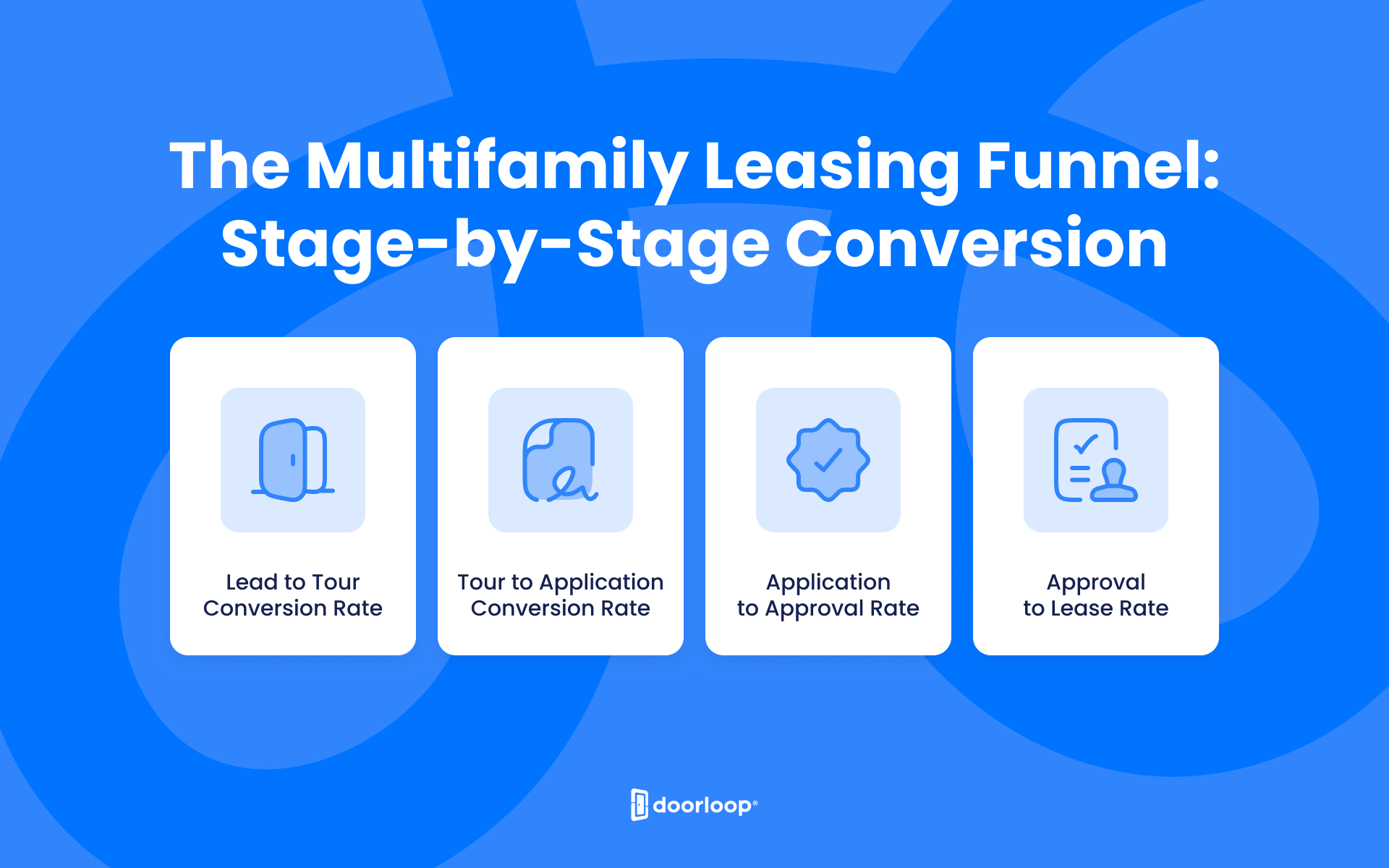
The Multifamily Leasing Funnel: Stage-by-Stage Conversion
The leasing journey contains multiple distinct stages that provide insights into operational performance. Identifying lead drop-off points reveals the necessary focus for training or marketing adjustments. Each stage generates a unique conversion percentage that contributes to the total end-to-end rate.
Lead to Tour Conversion Rate
Lead to tour conversion rate is defined as the total number of leads that resulted in-person visits, virtual walkthroughs, or self-guided tours. Alternative names include "inquiry-to-tour rate". Industry benchmarks suggest a 25% lead-to-tour rate is common for healthy properties. Slow response times and poor data quality from third-party sites can negatively impact performance at this stage. Listings with beautiful and clear photos, well written enticing descriptions can increase the conversion rate at this stage.
Tour to Application Conversion Rate
The tour to the application conversion rate stage measures how many prospects apply after viewing a unit. Calculation involves dividing total applications by the number of tours completed. According to RentViewer, a 40% tour to application rate is the benchmark. Unit availability and on-site experience influence the prospect's decision to proceed with an application. Pricing transparency during the tour ensures that only qualified applicants move forward.
Application to Approval Rate
The application to approval rate is defined as the number of applications that are approved by the property owner/property manager. This metric is dependent on the specific screening criteria set by the property owner or property manager. Strict credit and income thresholds can lead to lower approval rates (but presumably also higher quality tenants andless eviction risk). Managers balance the need for high occupancy with the risk of future payment issues.
Approval to Lease Rate
The approval to lease rate is defined as approved applicants who finalize their rental agreement. Industry data shows a 70% approval to lease benchmark for multifamily assets. Drop-offs at the stage occur due to competing offers or sudden changes in prospects needs. Intent remains highest during approval because the prospect has already invested time in the application process. Clear communication ensures that approved applicants feel confident in their choice.
What Factors Affect Lead to Lease Conversion Rate?
Factors affecting lead-to-lease conversion include lead source quality, lead response time, pricing strategies, screening criteria, and seasonality. Each variable plays a distinct role in moving a prospect toward a signed agreement.
- Lead source quality: Lead quality and lead intent will vary widely based on their source/channel. Organic search and referral leads tend convert at higher rates. Paid campaign conversion rates depend on the optimization of the campaign.
- Lead response time: Conversion rates increase when staff respond to inquiries within five minutes of the first contact. Delays provide opportunities for prospects to contact competing properties.
- Pricing strategies: Financial incentives, like a free month of rent, can increase conversion rates. Data shows prospects receiving a free month convert at a 10.10% rate compared to a 3.2% baseline.
- Screening criteria: High income thresholds and strict credit requirements limit the number of prospects reaching the final stage. These criteria prioritize tenant quality over sheer conversion volume.
- Seasonality: Vacancy rates and local competition fluctuate based on the time of year. Peak leasing seasons see higher conversion activity than winter months.
How to Improve Lead-to-Lease Conversion Rate
Improving the rate requires a sequence of operational changes ordered by impact. The tactics target different stages of the funnel to reduce friction and improve the resident experience.
- Respond to leads within 5 minutes: Immediate responses capture prospect interest while intent remains at a peak level. Chatbots and AI tools maintain this speed outside of normal business hours.
- Qualify leads before they enter the funnel: Lead qualifying questions involve move-in date, budget, and pet status. The focus ensures that leasing agents spend time on high probability prospects.
- Automate lead nurture: Automated sequences deliver follow-up messages on a set schedule after the initial contact. Consistent communication prevents prospects from feeling ignored during a search.
- Offer self-scheduled and virtual tours: Self-scheduling tools allow prospects to book visits instantly without waiting for a return call. Virtual tours provide an immediate viewing option for out-of-town applicants.
- Track conversion at every funnel stage: Monitoring each step individually reveals whether the problem lies in marketing or on-site sales. Dashboards provide real-time visibility into the health of the pipeline.
How Property Management Software Improves Lead to Lease Conversion
Property management software helps improve lead-to-lease conversion rates by provides the necessary system to manage large volumes of rental inquiries. Automation within the software reduces the manual workload associated with follow-up tasks. Managers can access real-time reports to evaluate the effectiveness of marketing spend. Property management software platforms link prospect data directly to leases and accounting records for an accurate view of conversion rate and marketing funnel performance.
Built-In CRM
Centralized data ensures that every prospect receives a defined next action. Centralized pipelines prevent leads from getting lost in individual email inboxes. Pipeline views force every prospect into a stage with a clear following step. Research shows that leads contacted within minutes convert better than leads contacted hours later.
Listing Syndication to Major Rental Sites
DoorLoop pushes vacancies to major sites (Zillow and Trulia) to increase lead volume. Higher volume from diverse sources provides more opportunities for conversion. Listings go live within hours of a vacancy notice to capture inbound traffic quickly. Syndication speed ensures the property stays ahead of local market competitors. Broad exposure attracts qualified prospects from multiple digital channels.
Tenant Screening
Background checks through TransUnion provide results in minutes rather than days. Speeding up the approval window prevents prospects from choosing a competitor. Integrated screening eliminates the need for manual paperwork handoffs. Prospects upload documents and e-sign from any location. Operators receive complete credit and criminal reports within the unified system.
eSignature for Leases
Electronic signatures allow residents to finalize agreements from any device instantly. Removing the need for physical paperwork accelerates the final stage of the funnel. Lease templates pre-populate with prospect data already stored in the system. Digital records remain secure and accessible for future reference.
Frequently Asked Questions about Lead to Lease Conversion Rate
What is a good lead-to-lease conversion rate for apartments?
A 10 to 15% range is a good lead-to-lease conversion rate for apartments. Top performers reach over 16.5% while the average remains closer to 8.7%. Performance variations depend on the specific mix of lead sources and the strictness of screening criteria. Organic search leads convert at higher rates than aggregated marketplace leads. Managers aim for the targets to ensure the marketing budget generates a sufficient return on investment. Higher rates indicate a well-trained staff and competitive pricing. Properties falling below the average require an audit of the full funnell, including follow-up process and unit presentation.
How long does it take to convert a lead to a lease?
Converting a lead to a lease takes between 30 and 45 days on average across multifamily marketing channels. Timelines vary depending on the specific source and the urgency of the prospect. Managers track the length of the sales cycle to boost follow-up timing. Shorter conversion times indicate an efficient application and screening process.
What is the difference between lead to lease and tour to lease?
The difference between lead to lease and tour to lease lies in the specific segment of the sales funnel being measured. The lead-to-lease conversion rate tracks the entire journey from the first inquiry to the signed agreement. Tour to lease focus exclusively on the percentage of prospects who sign after visiting the property. Measuring the full funnel identifies overall marketing efficiency, while tour metrics evaluate a subset of the funnel, such as on-site sales skills, or rental unit presentation. Comparing the metrics helps identify whether friction exists in the digital experience or the physical tour, or both.
Frequently Asked Questions