





A multifamily due diligence checklist involves a systematic investigation into the financial, physical, legal, and tenant health of a rental property to ensure the property meets investment criteria. Investors execute the reviews within a thirty to sixty-day window before the final sale. Every discovery from the checklist process provides a basis for price adjustments or contract termination. The process protects capital by identifying hidden liabilities and operational weaknesses.
Financial reviews of a multifamily property examine historical income statements and tax records to verify property profitability. Physical inspections evaluate structural integrity and mechanical systems through third-party assessments. Legal reviews search for title defects and zoning compliance. Tenant audits verify every lease agreement and security deposit balance against the provided rent roll. Categories organize the investigation for the buyer.
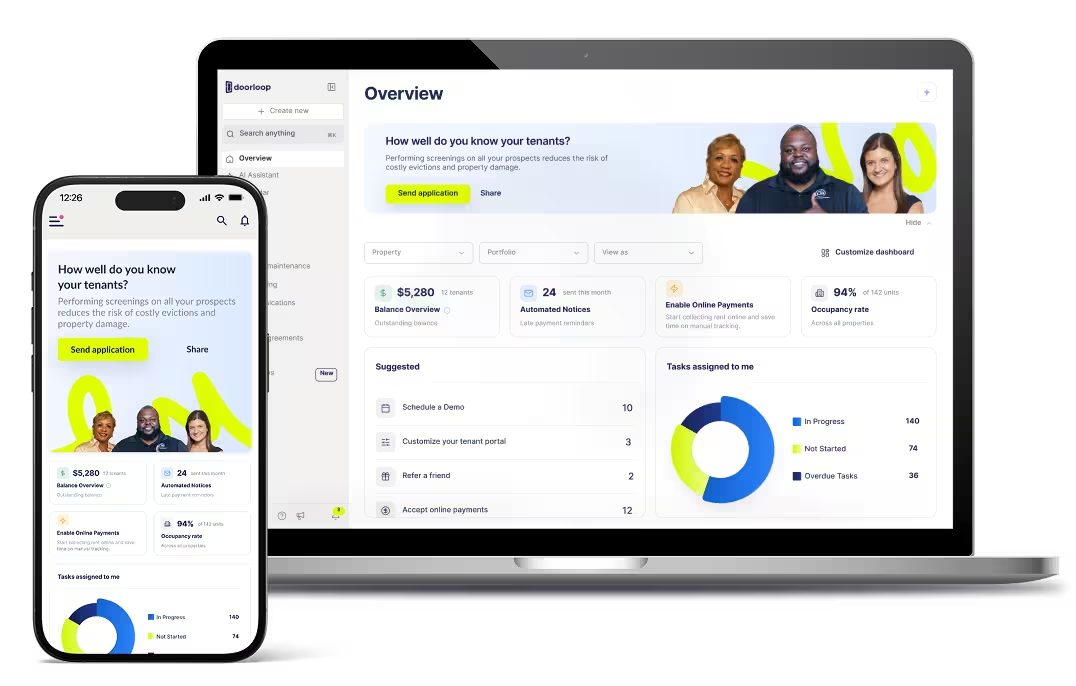
Property management software stores the critical documents and inspection reports for long-term reference after the closing date. Unified databases maintain the historical record of unit conditions and lease terms across the entire portfolio. Owners access the due diligence archive to track capital expenditure progress and tax assessments. Digital storage prevents the loss of warranty information and service contracts during management transitions. Organized data supports future refinancing and disposition efforts.
What Is Multifamily Due Diligence?
Multifamily due diligence refers to the formal investigative period between contract signing and property closing. Property acquisition teams use the due diligence window to verify the financial, physical, legal, and tenant health of a property. The process results in a final go or no-go decision or provides a basis for price adjustments.
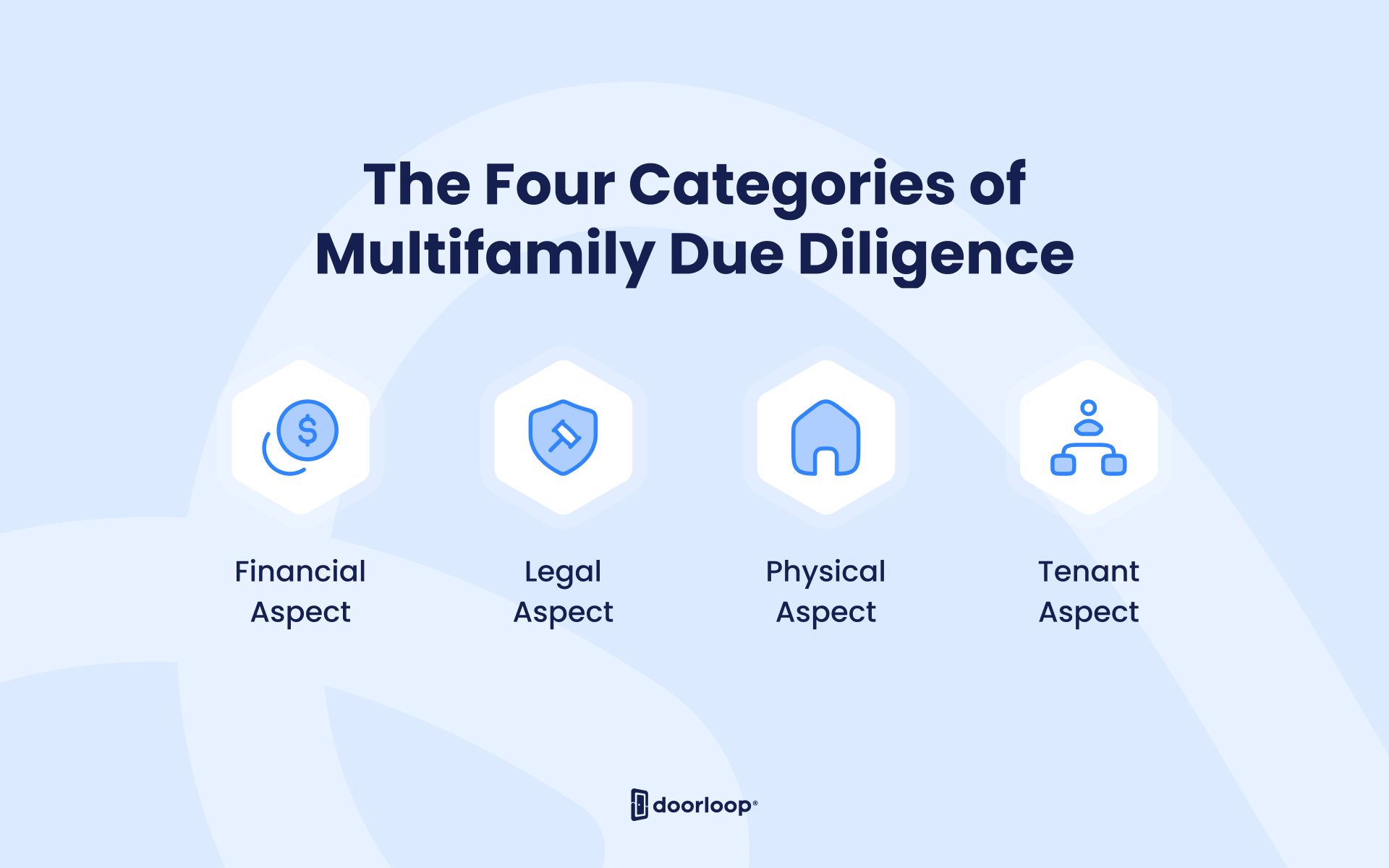
The Four Categories of Multifamily Due Diligence
Investors organize the review into four distinct categories covering financial, physical, legal, and tenant aspects. Financial reviews confirm that the stated income matches the actual bank deposits and tax filings. Physical inspections look for structural defects that require immediate capital expenditures. Legal reviews identify title encumbrances and regulatory violations that restrict property usage. Tenant audits ensure the current residents have valid leases and paid security deposits. Skipping any of these categories can expose the buyer to significant risk and potential financial loss.
Multifamily Due Diligence Checklist
Trailing 12-month income and expense statements (T-12)
The trailing 12-month income and expense statements (T-12) list the monthly revenue and operational costs for the previous calendar year. Analysts check for anomalies and inconsistencies in the T-12 report. Anomolies might include large one-time payment events (like an insurance payout), or missing utility months in the record. Inconsistencies could include expense miscategorization (such as recurring repair costs categorized as capital expenditure), or bank statements not matching deposits listed in the historical records. Inconsistencies in the T-12 reports require immediate explanation from the seller. Verifying the trailing twelve-month performance reduces risk associated with a property acquisition and prevents overpaying for the asset.
Rent roll audit
Rent roll audits compare the seller summary sheet against every individual lease agreement in the file. Occupancy claims require verification through physical inspections and utility billing records. Identification of concessions and employee discounts reveals the true market rent potential. Red flags include occupied units coded as storage or units leased to friends and family at reduced rates. Cross-checking move-in dates against the historical record exposes recent attempts to inflate occupancy before the sale.
Operating expense verification
Operating expense verification involves matching line items on the T-12 to actual third-party invoices and receipts. Property tax bills and insurance declarations provide concrete proof of the highest fixed costs. Payroll records and vendor contracts show the ongoing labor and service requirements for the building. Low repair and maintenance spending signals deferred maintenance that can cost a new owner more later. Confirming ongoing operational costs such as trash pickup, and landscaping costs can help prevents surprise expenses and budget shortfalls during the first year of ownership.
Property tax and insurance review
Property tax and insurance review requires confirmation through the local county or city collector records. Sales transactions trigger reassessments in jurisdictions, which leads to higher tax liabilities for the buyer (a concept referred to as “tax trajectory”). Tax trajectory is essential to understand for a buyer, because it immediately impacts net operating income, and has second order effects of increasing insurance premiums. Comparing the seller's historical premiums to modern market rates prevents surprises after the closing. Buyers should also evaluate the impact of tax exemptions and recent property tax appeals on the projected net operating income.
Utility bill analysis
Utility bill analysis of twelve to twenty-four months of utility bills identifies seasonal trends and consumption spikes, and helps predict the monthly costs for the building. High water bills can signal hidden plumbing issues such as leaks in underground piping or leaking toilets in units. Gas and electric data reveal the efficiency of the HVAC systems and building insulation. Owners can model the implementation of RUBS (i.e. Ratio Utility Billing System) or sub-metering to shift costs to the tenants. Trash disposal costs require verification against current contracts to identify inconsistencies or opportunities for savings.
Bank statements and deposit verification
Three to six months of bank statements provide evidence of actual cash flow into the property. Matching deposits to the rent roll ensures that the reported income exists in a liquid form. Off-the-books income from laundry or parking requires verification through physical collection records. Unidentified deposits represent owner capital injections rather than rental revenue. Consistent banking records build trust in the financial representations made by the seller.
Property Condition Assessment (PCA)
Property Condition Assessment (PCA) reports evaluate the roof, foundation, HVAC, plumbing, electrical, and building envelope. Third-party engineering firms perform the detailed inspections to identify immediate repair needs. The final deliverable includes a five to ten-year capital expenditure plan for major systems. Structural defects found in the report provide grounds for requesting price reductions or repairs. Lenders require these assessments to determine the necessary replacement reserves for the loan.
Unit-by-unit interior inspection
Unit-by-unit interior inspection allows the buyer to document the current interior condition and appliance age. Observations of deferred maintenance or unauthorized pets help refine the renovation budget for the project. Down units require specific notes regarding the cost of returning them to the rental market. Tenant complaints visible during the walk provide clues about underlying management issues or mechanical failures. Documenting the finishes in every residence ensures the rent roll accurately reflects the actual unit quality.
Roof, HVAC, and major systems review
Roof, HVAC, and major systems review estimate the remaining useful life of critical components of the property. Replacement records and warranty documents confirm the history of capital improvements. Projected expenditures are then based on the current age of the major systems. Outdated electrical panels or galvanized plumbing require budgeting for future upgrades. Energy-efficient systems reduce long-term operating costs and attract high-quality residents. Detailed system audits prevent unexpected system failures and unexpected costs after the property is acquired.
Environmental Site Assessment (Phase I)
Environmental Site Assessment (Phase I) reports examine historical site use and neighboring contamination risks through database reviews. Regulatory records indicate previous spills or underground storage tanks on the property. Findings of recognized environmental conditions trigger a more invasive Phase II investigation. Lenders mandate these reports to protect against liability for hazardous material cleanup. Understanding the environmental history mitigates the risk of government-mandated remediation. Clear environmental status is a prerequisite for most loans.
Survey and zoning verification
American Land Title Association (ALTA) Surveys confirm the property boundaries and identify any encroachments or easements. Zoning verification ensures the building complies with current land use regulations. Non-conforming uses limit the ability to rebuild the structure after a catastrophic loss. Encroachments from neighboring fences or buildings require legal resolution before the property transfer. Identifying building setbacks and height restrictions helps with future expansion plans.
Pest and mold inspection
Pest inspections search for termites or bed bugs that damage the structure or living conditions of the property. Mold inspection occurs in older buildings or areas with previous water damage. High-humidity climates warrant specific checks for fungal growth behind walls or in crawlspaces. The cost of these inspections is minimal compared to the risk of a widespread infestation. Remediation requirements identified during the review become negotiation points for the buyer.
Title commitment and exception review
A clear title is the first step in successful ownership. Title commitment and exception review reveal any liens or encumbrances against the property. Prior liens for unpaid taxes or contractor work must be cleared before the closing date. Confirming the clean transfer of title protects the buyer's ownership interest. Legal counsel evaluates the title report to ensure the property is marketable.
Service contracts and vendor agreements
Service contracts and vendor agreements identify the recurring costs for landscaping, pest control, and trash. Termination clauses determine if the new owner can cancel agreements upon taking ownership. Cable or internet agreements can usually transfer with the property for specific terms. Identifying which vendors will remain active helps maintain operational continuity after the sale. Reviewing the agreements beforehand helps prevent legal disputes over unpaid invoices or contract breaches.
Litigation, code violations, and notices
Searches for active or pending lawsuits identify legal risks against the property ownership. Open code violations from the building department require immediate resolution or budgeting for fines. Fair-housing complaints indicate potential management problems that affect the property's reputation. Notices from the city regarding rezoning or eminent domain affect long-term value. Resolving legal issues before closing protects the buyer from any of these inherited liabilities.
Permits and certificates of occupancy
Permits and certificates of occupancy confirm that all units meet local safety and building codes. Identifying unpermitted improvements protects the buyer from city-mandated teardowns or fines. Renovations require proof of final permit sign-offs from the local building department. Missing certificates can prevent the legal rental of specific units in some jurisdictions, meaning there could be risk to revenue. Confirming the legal unit count matches the tax records prevents these types of valuation errors.
Loan documents (if assuming financing)
Reviewing existing loan documents involves checking interest rates, maturity dates, and prepayment penalties of an existing loans the buyer will be assuming as part of the deal. Assumption requirements dictate the timeline and cost of transferring the debt to the buyer. Lender consent is a necessary path item for the closing schedule. Understanding the current loan covenants prevents accidental defaults after the acquisition. Financial terms must align with the investment strategy for the hold period.
Lease file audit
Matching signed leases to the rent roll ensures that every resident has a legal agreement. Confirming lease terms and end dates allows for accurate vacancy forecasting. Renewal options and special riders require documentation to avoid future tenant disputes. Missing leases or signature pages create legal vulnerabilities for the new owner.
Security deposit reconciliation
Security deposit reconciliation involves matching security deposit balances in the bank to the amounts listed in the leases. Deposits are a significant liability for any building, so planning the transfer of the security deposit funds at closing ensures the new owner can meet refund obligations. Confirming that deposits are held according to state law is necessary to prevent legal penalties. Discrepancies between the bank and the lease files require credits from the seller.
Delinquency and collections review
Delinquency and collections review identify tenants who consistently pay late or remain in arrears. Active eviction filings show the number of units that do no produce revenue and are currently unavailable for new leasing due to eviction processes. Collection-status accounts can provide insight into the quality of the current tenant screening process. High delinquency rates indicate a need for more aggressive management after the close. Reviewing the history of bad debt helps model the future economic vacancy.
Estoppel certificates from tenants
Estoppel certificates from tenants confirm the lease terms and the absence of landlord defaults. Documents prevent residents from claiming different terms after the property changes hands, as signed estoppels provide a legal baseline for the resident relationships. Collecting certificates from a majority of tenants is a standard lender requirement. Non-responses require secondary efforts to secure the necessary documentation. These estoppel certificates are usually the final verification for the ownership group before closing.
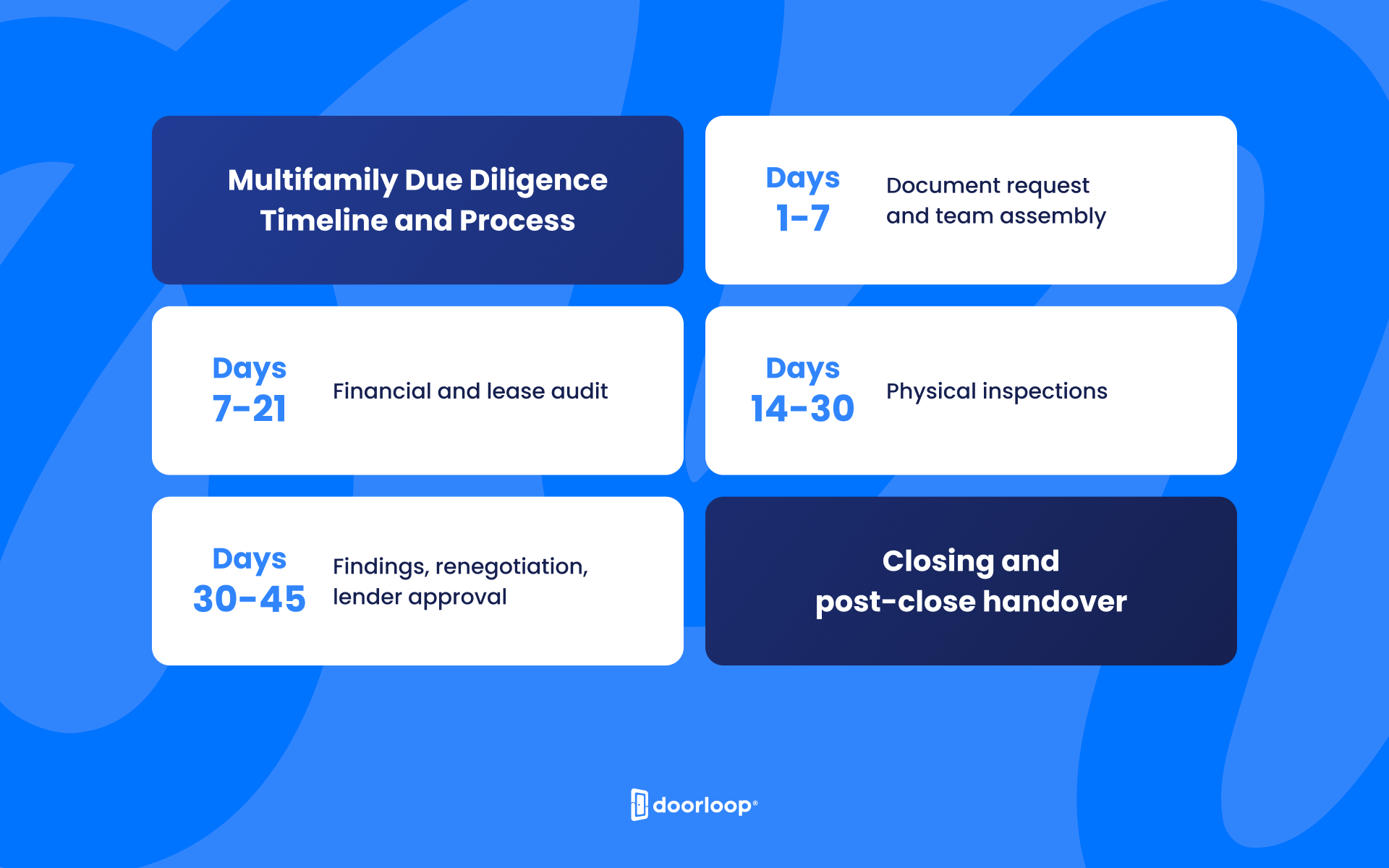
Multifamily Due Diligence Timeline and Process
Multifamily due diligence timeline and process runs thirty to sixty days from the contract signing to the final closing. The process moves through distinct phases (document requests, financial auditing, and physical inspections). Buyers assemble a team of engineers, environmental specialists, and attorneys immediately after the contract signing. Results from each phase determine if the deal stays on track, requires a price adjustment, or is terminated. Effective management of the schedule ensures a smooth transition of ownership.
Days 1-7: Document request and team assembly
Sending a complete document request to the seller starts the formal investigation. The team engages third-party firms for the physical reports, environmental reviews, and legal audits. Financing applications require the submission of property data to the lender. Initial reviews of the rent roll and T-12 begin as soon as the files arrive. Setting the schedule with the seller ensures access for all inspectors. A quick starts are essential during the due-diligence period to ensure a deal goes through according to schedule.
Days 7-21: Financial and lease audit
Teams review the trailing twelve-month statements, bank records, and individual lease files. Financial findings serve as the basis for any necessary price renegotiations. Mismatches between reported income and bank deposits trigger deeper investigations. Auditors verify every security deposit balance and delinquency report. The phase confirms the economic health of the property before moving to physical checks. Accurate audits are a core part of the process.
Days 14-30: Physical inspections
Engineers perform the property condition assessment (PCA) while specialists handle the environmental and survey work. Unit walks allow the buyer to see every residence and document the condition. Coordinating access with the seller ensures that tenants receive proper notice before entry. Physical inspection data provides a clear picture of maintenance requirements, and findings of structural or mechanical issues can lead to revised capital expenditure estimates and revised offers.
Days 30-45: Findings, renegotiation, lender approval
Compiling all reports from the previous weeks creates a final view of the asset. Buyers negotiate for credits or price reductions based on discovered defects or income errors. Lenders review the final due diligence package before issuing a commitment letter. Finalizing the closing checklist ensures that all legal and financial items are in place. The phase determines if the purchase proceeds to completion.
Closing and post-close handover
Closing day mechanics include the transfer of the down payment and the settlement of prorated expenses. Lease assignments and vendor notifications ensure a smooth operational transition. The property management team receives the full due diligence archive for immediate use. Security deposits move to new accounts in compliance with state regulations. Clear handover procedures maintain stability for the residents after the transfer. Success depends on the preparation done during the investigation.
Frequently Asked Questions
What are the 4 P's of due diligence?
The 4 P's of due diligence are People, Performance, Philosophy, and Process. People refers to the background and track record of the property owners and the management team. Performance refers to the historical financial results and the current occupancy trends for the building. Philosophy evaluates the investment strategy and the long-term goals for the asset. Process analyzes the legal frameworks and the operational methods used to maintain the property. Investors rely on these "pillars" of due diligence to ensure every acquisition meets their specific criteria (such as risk tolerance). Of the 4 P's, "Performance" data remains the most significant predictor of future financial success of an investment.
How long is the due diligence period for multifamily?
The due diligence period for multifamily lasts between thirty and sixty days from the contract date. Large institutional deals use a forty-five-day window to accommodate complex financing and environmental reviews. Portfolio size or the discovery of structural issues lengthens the time needed. Short periods favor the seller while longer windows provide more protection for the buyer. Negotiating the right length is a critical part of the initial contract. Lenders require at least thirty days to process the third-party reports.
What is a property condition assessment in multifamily?
A property condition assessment (PCA) in multifamily is a third-party engineering report that evaluates the structural and mechanical health of a building. The inspector reviews the roof, HVAC, foundation, and electrical systems for any signs of failure. Findings include a list of immediate repair items and a long-term capital expenditure schedule. Lenders use the report to determine the necessary funds for replacement reserves. It provides the buyer with a realistic budget for future maintenance and upgrades. Understanding the physical state of the asset is mandatory for any investment strategy. The report helps in negotiating price reductions for significant defects found.
What is a Multifamily Property?
A multifamily property consists of a single residential structure designed to house multiple separate households. Multifamily properties range from small duplexes to massive high-rise developments in dense urban centers. The asset class remains a core component of the housing market across the country. For more information see our full article: What is a Multifamily Property?
Frequently Asked Questions