




Resident engagement is the active and meaningful involvement of tenants in their living environment. High levels of resident engagement participation improve lease renewal rates and property reputation. Success requires specific strategies like consistent communication and hosting accessible events for the residents. Portal logins and event participation help measure the impact of these initiatives over time. Property managers avoid common mistakes by maintaining a regular schedule and closing feedback loops with tenants. Technology such as property management software enables managers to scale the engagement efforts.
What Is Resident Engagement?
Resident engagement is the ongoing interaction between a tenant and their housing provider. The level of engagement can be used to measure the strength of the relationship and the sense of community within a property. Property managers and owners take the lead in creating opportunities for residents to interact regularly. Satisfaction scores reflect happiness with services, while engagement reflects active participation in community life. Community engagement emphasizes social bonds between neighbors in the residential area.
Operators use these measures to predict long-term retention for the property portfolio. The connection encourages tenants to treat the property with more care and respect. Engaged communities experience less social isolation and higher levels of mutual support among neighbors. Management teams find that highly involved residents provide valuable feedback for future capital improvements. Relationships turn a simple rental unit into a long-term home for the tenant.
Why Does Resident Engagement Matter?
Resident engagement matters because high engagement levels directly increase the likelihood of lease renewals at the end of a term. Residents with strong ties to their neighbors and to management are less likely to move out, and more likely to leave positive online reviews. Active communities also experience fewer tenant complaints to management as residents feel comfortable resolving issues directly with staff. Resident engagment can also result in an increase in net operating income through lower marketing expenses and fewer turnovers.
What Are the Levels of Resident Engagement?
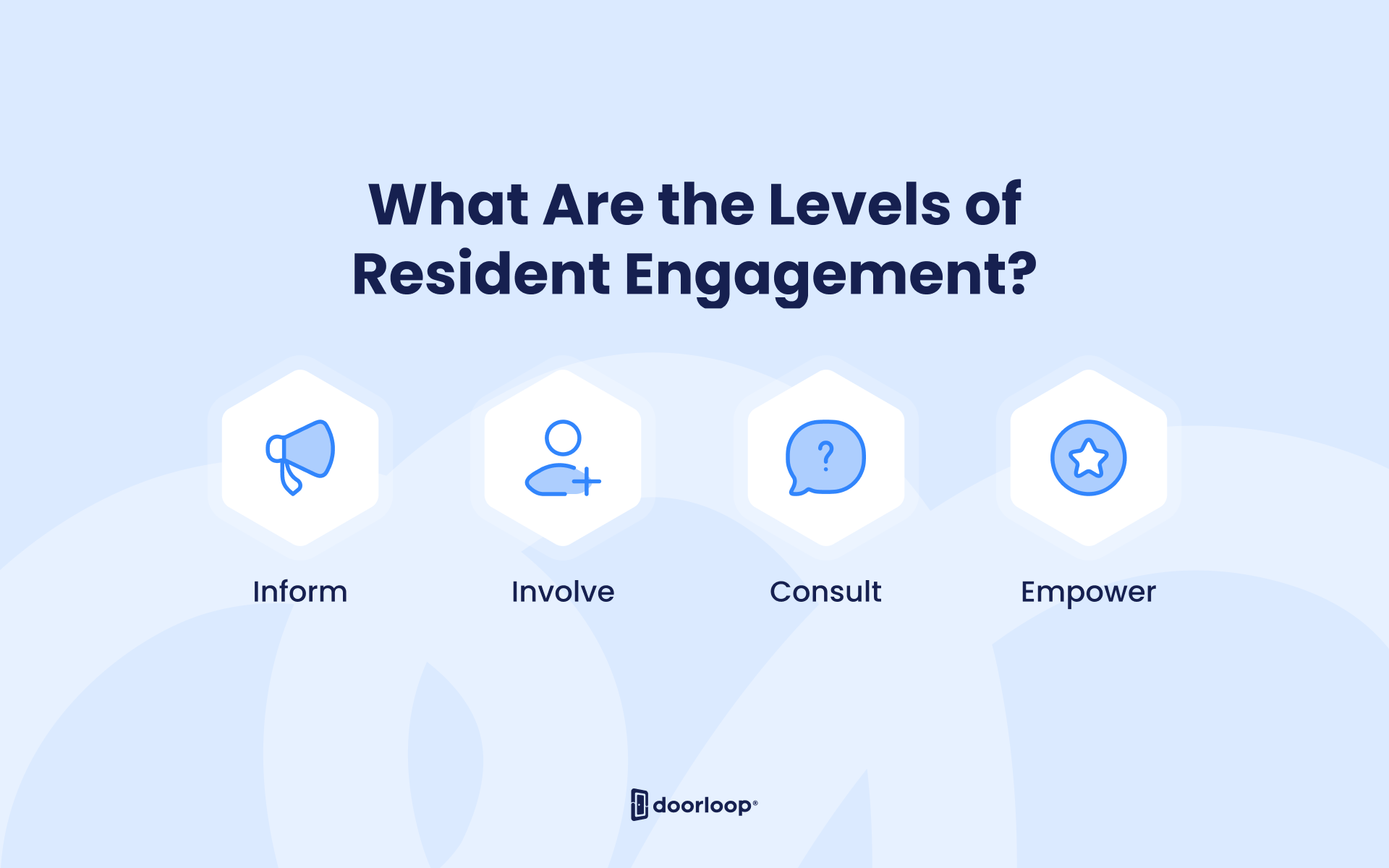
Engagement exists on a spectrum that moves from passive information sharing to active resident leadership. Managers identify where their community sits to plan the next steps for growth.
- Inform: The inform level involves one-way communication where management shares newsletters or emergency alerts. Tools like email and lobby posters support the baseline by keeping residents aware of property updates.
- Consult: Management collects feedback from residents through surveys and suggestion forms at the consult level. Property owners use the polls to understand tenant preferences before making minor changes to common areas.
- Involve: Residents help shape decisions by providing input on event planning or amenity upgrades. The stage ensures that community offerings align with the actual desires of the people living there.
- Empower: Residents lead their own initiatives, (book clubs, or fitness groups) with minimal management oversight. The role of the manager shifts to supporting the organic peer-led movements with space and resources.
Most communities operate within the inform or consult stages while aiming for higher involvement.
How Do You Increase Resident Engagement?
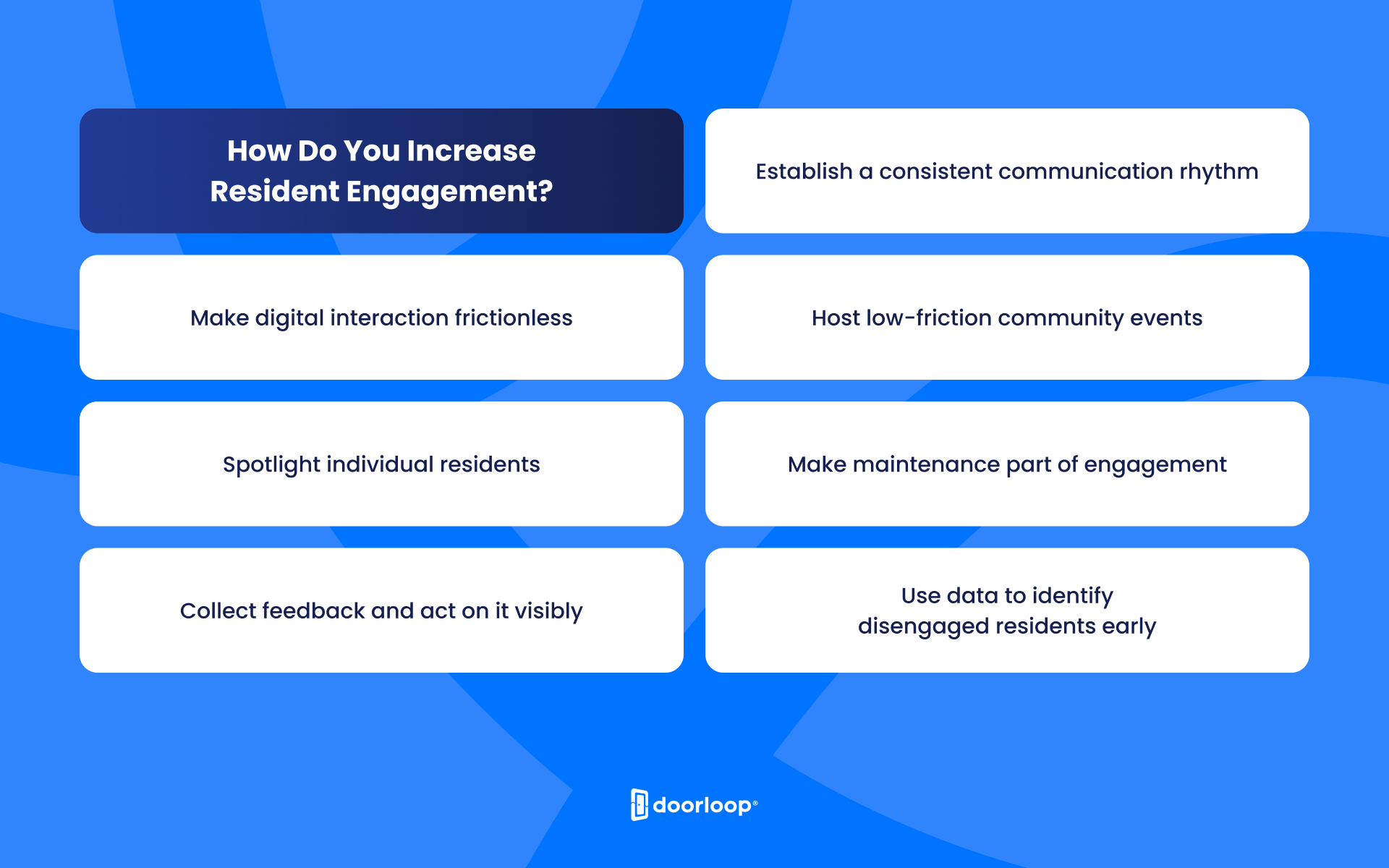
Increasing involvement requires a layered approach that combines communication and technology applied consistently over time. Small efforts performed consistently create a stronger impact than large one-off events.
- Establish a consistent communication rhythm: Managers provide weekly updates or monthly newsletters at predictable intervals. Predictability ensures that residents know when and where to find important property information.
- Make digital interaction frictionless: Residents use mobile portals to book amenities and pay rent without manual paperwork. Mobile accessibility allows people to interact with management while on the move or at work.
- Host low-friction community events: Simple gatherings (food truck nights, coffee mornings, fitness classes, and pet meetups) encourage easy participation. Consistency in scheduling the events outperforms expensive one-time productions.
- Spotlight individual residents: Recognition tactics like resident of the month posts celebrate the people in the community. Highlighting personal milestones helps residents feel seen and valued by the management team.
- Make maintenance part of engagement: Every work order serves as a moment to build trust through quick completion and clear updates. Follow-up messages after a repair show that the management cares about the resident experience.
- Collect feedback and act on it visibly: Short surveys allow residents to share their thoughts on property improvements. Visible changes based on the feedback demonstrate that management listens to the community.
- Use data to identify disengaged residents early: Declining login rates or missed events serve as signals for potential churn. Proactive outreach to the individuals helps re-establish a connection before they decide to move.
The strategies require consistent execution across hundreds of units to reach the desired participation levels.
How Do You Measure Resident Engagement?
Measurement provides the data needed to improve community involvement over time. Metrics help managers identify which initiatives work and which require adjustment.
- Portal/app login frequency: Regular logins indicate that residents are active and staying informed about property news. High frequency suggests that the digital tools provide value to the daily lives of the tenants.
- Event participation rate: Managers calculate the rate by dividing the number of RSVPs by the total unit count. Tracking the rate per event reveals which types of gatherings appeal most to the current resident base.
- Survey response rate: High response numbers signal that residents believe their opinions matter to the management. Declining rates indicate a growing disconnect between the tenants and the property goals.
- Maintenance feedback and CSAT scores: Post-completion ratings show the level of satisfaction with the most frequent point of contact. Target scores guide the maintenance team in improving service delivery.
- Renewal rate correlation: Engaged residents renew their leases at higher rates than those who remain isolated. The lagging indicator confirms the long-term success of the engagement program.
Common Resident Engagement Mistakes to Avoid
Predictable errors lead to the failure of community programs regardless of the initial budget. Avoiding the pitfalls keeps the engagement program focused and effective for the residents.
- Treating engagement as occasional, not ongoing: One-off events fail to build lasting relationships without a consistent communication rhythm. Long-term success depends on regular touchpoints throughout the entire year.
- Overcomplicating events: Simple recurring meetups perform better than elaborate productions that require heavy planning. Residents prefer easy gatherings that fit into their existing daily schedules.
- Ignoring digital convenience: Friction in the RSVP or payment process kills participation almost immediately. Requiring phone calls or emails for simple tasks discourages residents from getting involved.
- Not measuring participation: Improvement remains impossible if managers do not track which activities generate interest. Minimal tracking includes event attendance and digital portal usage.
- Collecting feedback but not closing the loop: Residents stop providing input if they see no visible changes after a survey. Proving that feedback leads to action is essential for maintaining trust.
How Property Management Software Helps With Resident Engagement
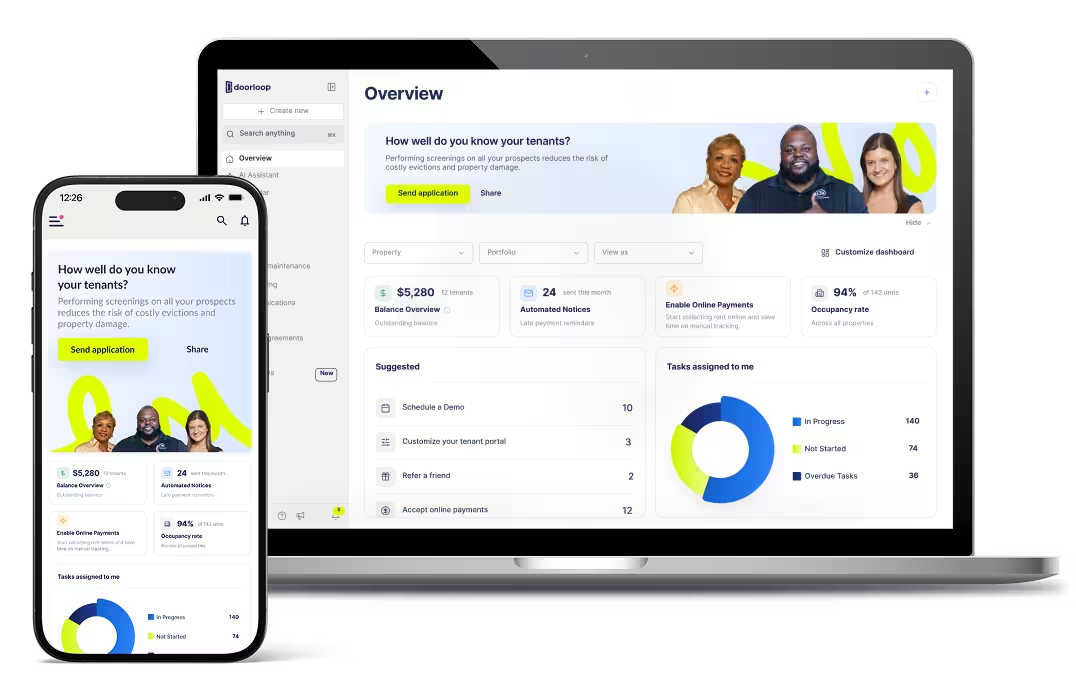
Property management software ensures that engagement strategies remain consistent across large portfolios. The tool removes the friction from daily interactions that lead to renewal decisions. Automation handles the repetitive tasks of information sharing so staff focus on person to person relationships. Tracking features allow owners to see exactly how often residents interact with the digital portal. Standardized processes ensure that every tenant receives the same high quality experience. Professional teams use property management software.
Frequently Asked Questions