




Key Takeaways
- Multifamily operators get value from AI when it removes manual steps, not when it adds review queues, rework, or unclear decisions.
- The biggest deployment pitfall is sending every AI output to senior staff for approval, which shifts work upward and slows portfolio operations.
- Teams that quietly redo AI outputs or return to manual processes are signaling a trust problem, often caused by weak templates, context, or use-case fit.
- Define measurable wins before rollout, such as draft time, follow-up threads, and reporting cycle time, then set approval rules and guardrails upfront.
AI adoption is no one-size-fits-all choice for operators. Some versions look like progress yet feel like more work. The tools are live, the team is using it, and somehow the to-do list is longer than it was six months ago.
This might seem like a technology problem, but in reality it's a deployment problem — one more common than most operators admit.
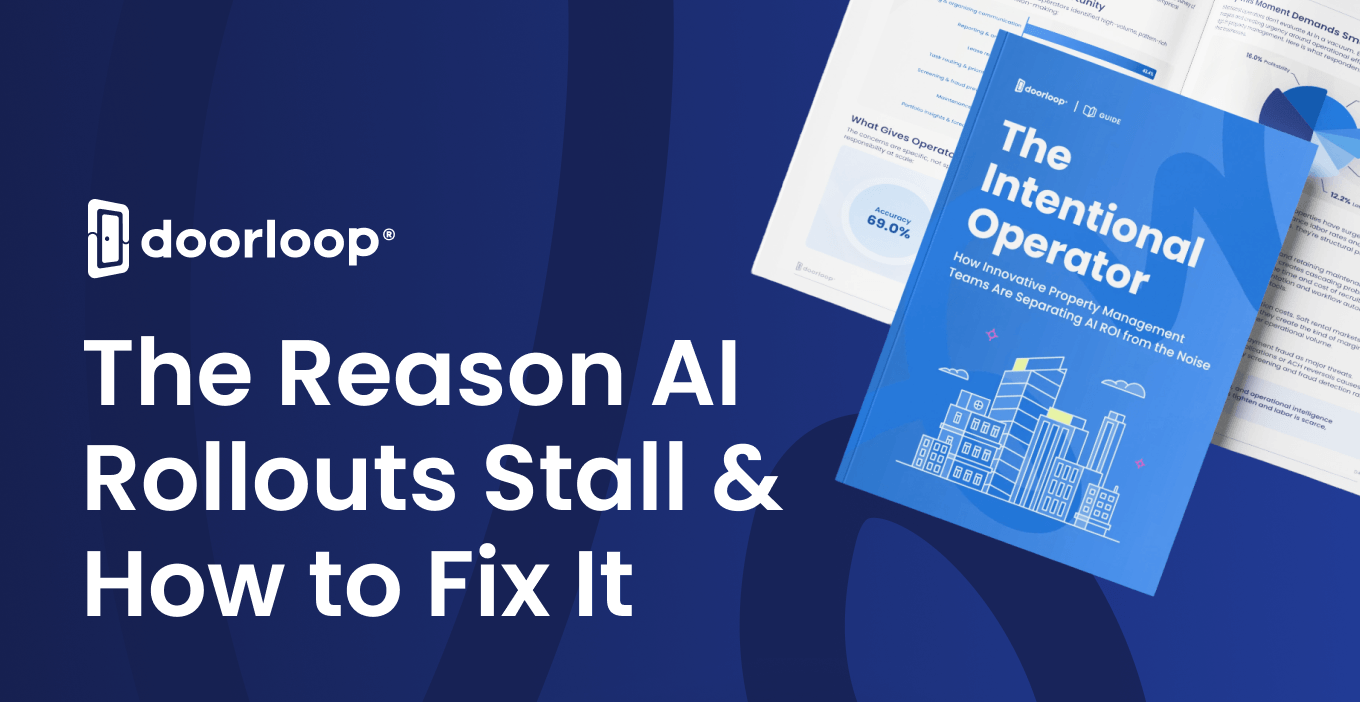
The good news? It's fixable. There’s even an in-depth playbook, The Intentional Operator, for getting this right. But first, you have to recognize what's actually happening.
The Gap Between "Using AI" and "Benefiting From It"
AI adoption and AI efficiency are unfortunately not the same. A team can be actively using AI every day and still be working harder than before because the way those tools were introduced created new steps rather than removing existing ones.
Here’s the most common version of this:
AI generates an output, and someone has to then review it before anything moves forward. If that review takes just as long as the original manual task, you haven't saved time. You've just added a middleman.
That's not a reason to abandon AI, however. It just requires better implementation, and more consideration towards how your workflows will benefit.
Three Patterns Worth Recognizing
1. The Review Bottleneck
Senior managers or ops leads become responsible for approving everything AI touches. The AI might work fast, but the approval queue doesn’t.That task-level efficiency becomes a real constraint at the team level.
This usually happens when the guardrails weren't defined before deployment. When it's unclear which outputs can go out as-is versus which ones need a second set of eyes, the default becomes ‘everything gets reviewed’. It’s a reasonable instinct, but it concentrates work rather than distributing it.
The fix isn't less oversight either. It's clearer rules about when oversight is required so routine outputs move quickly and edge cases get the attention they actually need.
2. The Trust Gap
This is quieter and harder to spot, but nonetheless an important signal. Staff start working around the AI — redoing outputs, defaulting back to manual processes — while the tool keeps running and you keep paying a subscription fee.
It usually means outputs aren't reliable enough for the team to act on them confidently. That's not always the AI’s fault either. Perhaps the input context isn't specific enough, the templates haven't been refined, or the use case wasn't the right fit to begin with.
If your team isn't using a tool they were trained on, ask why before any assumptions. The honest answer is often that the output quality isn't there yet for that specific workflow.
3. The Guardrail Vacuum
AI runs without clear rules, so every output becomes a judgment call. What should feel like a shortcut feels like a decision. The team is making the same assessments they always made, it’s now just one step later in the process.
Large portfolios generate enough volume that even small inefficiencies per task compound quickly. A guardrail vacuum doesn't create a crisis. It creates a slow, persistent drag that's easy to attribute to something else.
These patterns are preventable.The Intentional Operator includes the framework to avoid them.
What Intentional Deployment Looks Like
The operators who see genuine gains from AI share a few habits that have nothing to do with which tools they chose.
They define "better" before they deploy. Not in vague terms but measurable ones. Draft time per communication. Follow-up threads per maintenance issue. Reporting cycle time. If you can't point to a number that should move, you won't know if it did.
They ask AI for deployment help. Start with a prompt, not the task. Getting the workflow right before deployment matters. AI can help brainstorm and organize to prevent messy rollouts.
They build approval flows in from the start. Not as a safety net, but as a design decision. Knowing exactly which outputs need human sign-off — and which don't — is what prevents the review bottleneck from forming in the first place.
They treat guardrails as infrastructure. Tone guidelines, template libraries, escalation rules, exception handling — these aren't bureaucratic overhead. They're what makes AI outputs consistent enough to trust. Without them, every output is a one-off.
They measure reduced work, not just usage. The question isn't "how often is the tool being used?" It's "is the team carrying less manual burden than before?" Those are different questions with different answers.
Check-In Right Now
If you're mid-rollout or recently deployed an AI tool, ask this one question to your team directly:
Is there any workflow where you're spending more time now than before we introduced AI?
This is not an indictment. It’s diagnostic. The answer usually points to exactly where the guardrails need tightening, the templates need refinement, or the use case needs to be reconsidered.
AI earns its place in a large portfolio operation the same way anything else does: by making the day calmer and more predictable than it was before. When it's doing that, you'll know. When it's not, that question is usually where you find out why.
Want the full framework for deploying AI across a large portfolio — including a 3-tier rollout guide, use cases with proven defaults, and a 6-week implementation plan? Download The Intentional Operator.
Frequently Asked Questions